Recent work
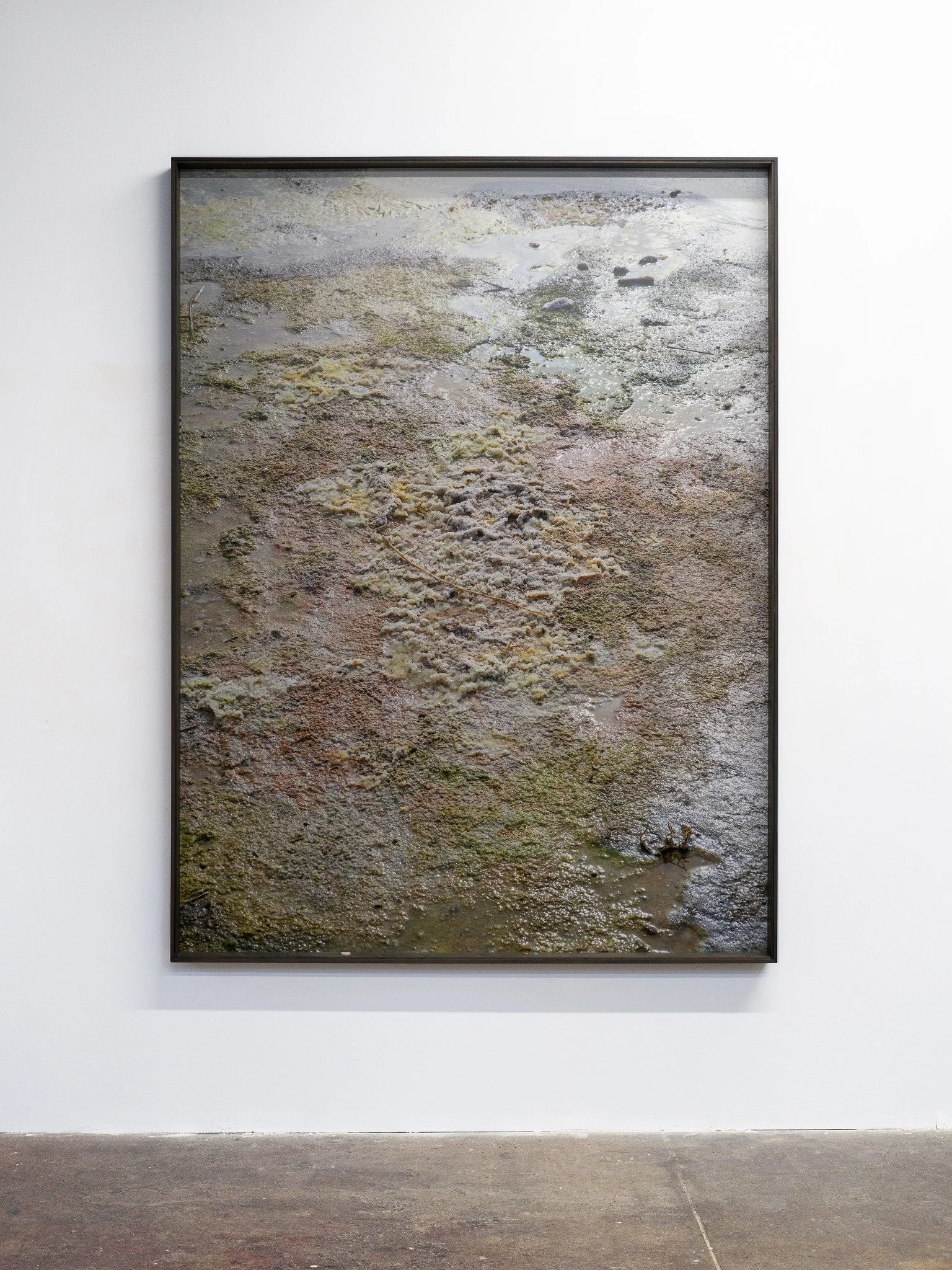
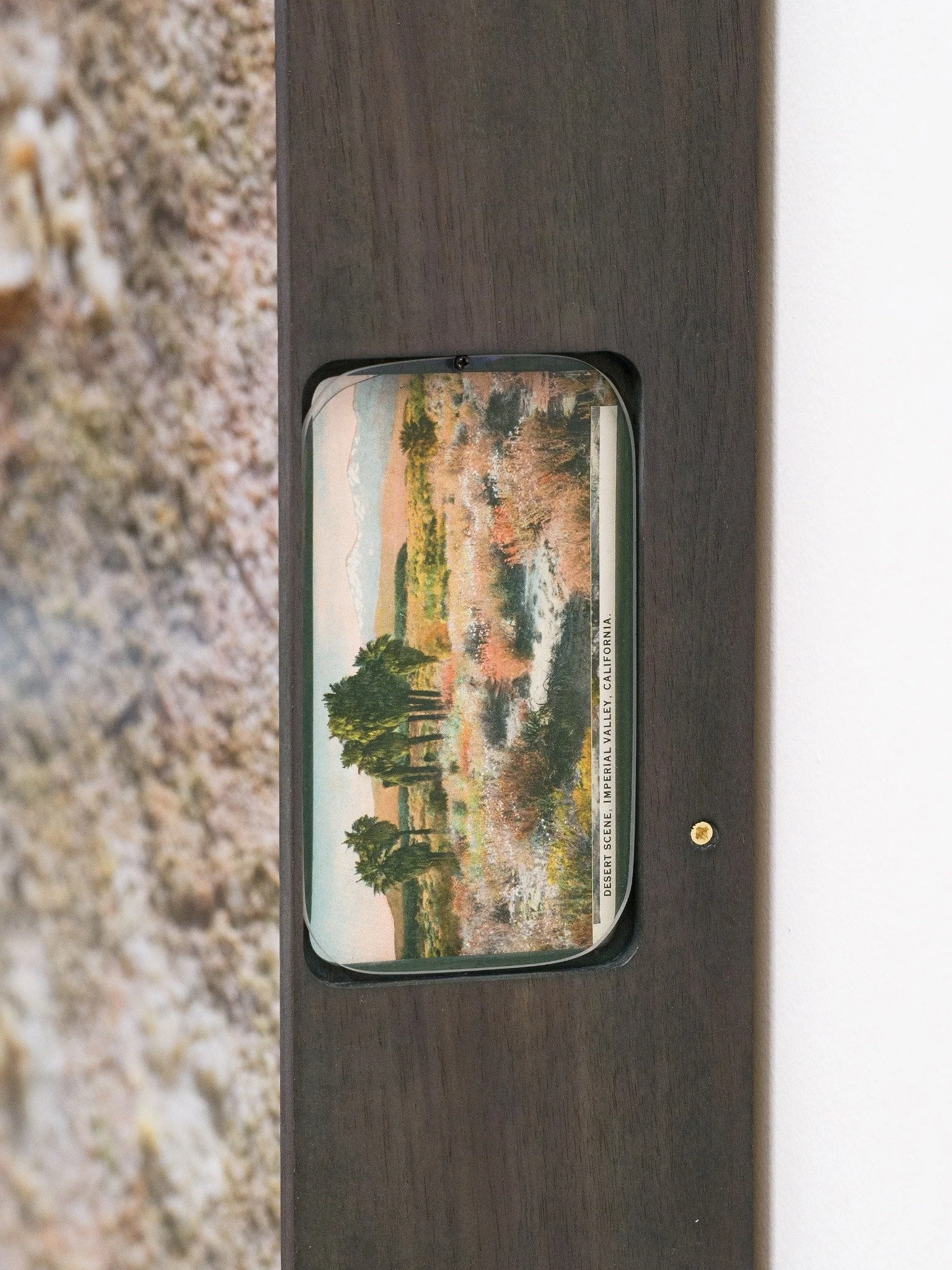
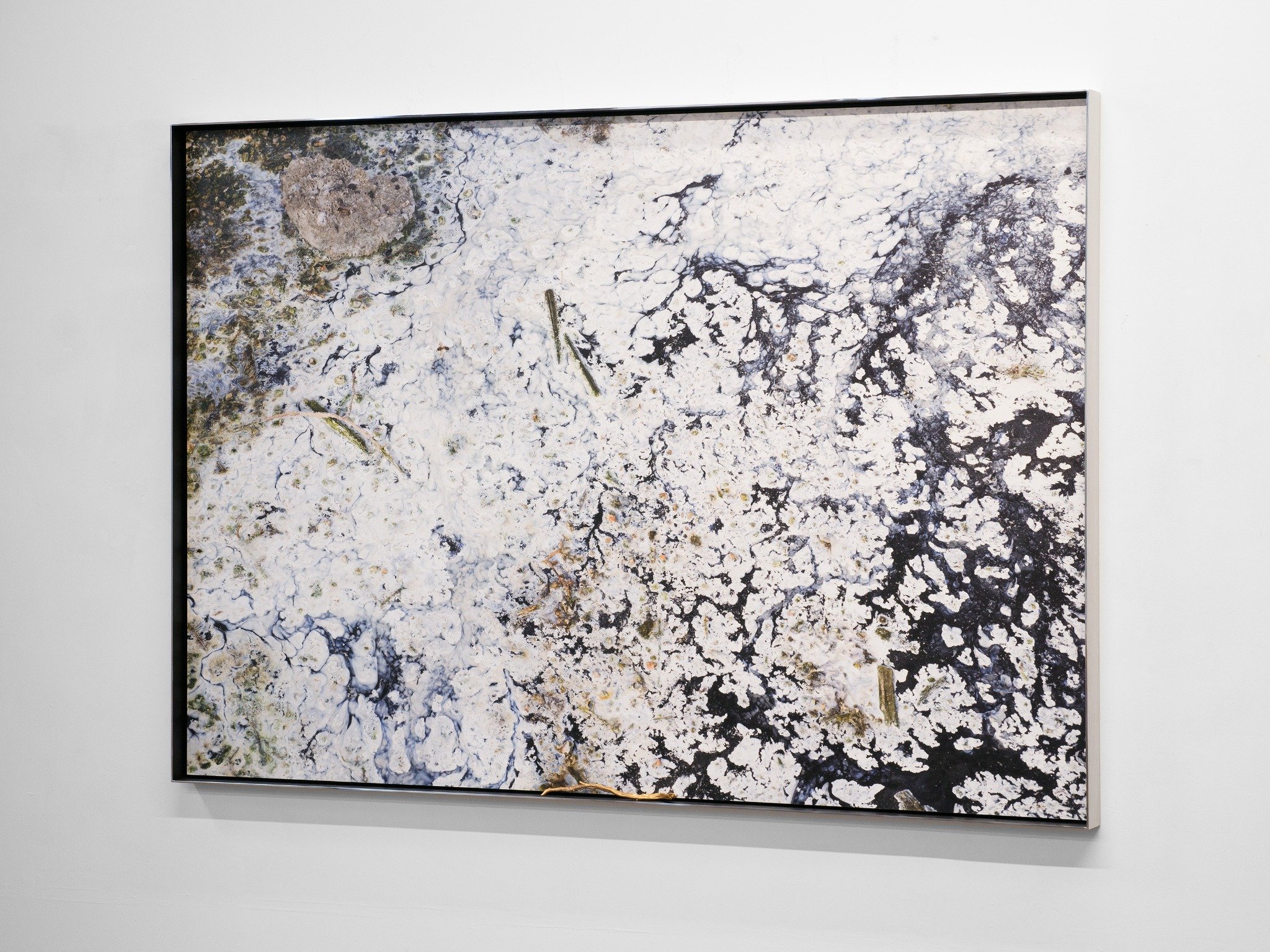
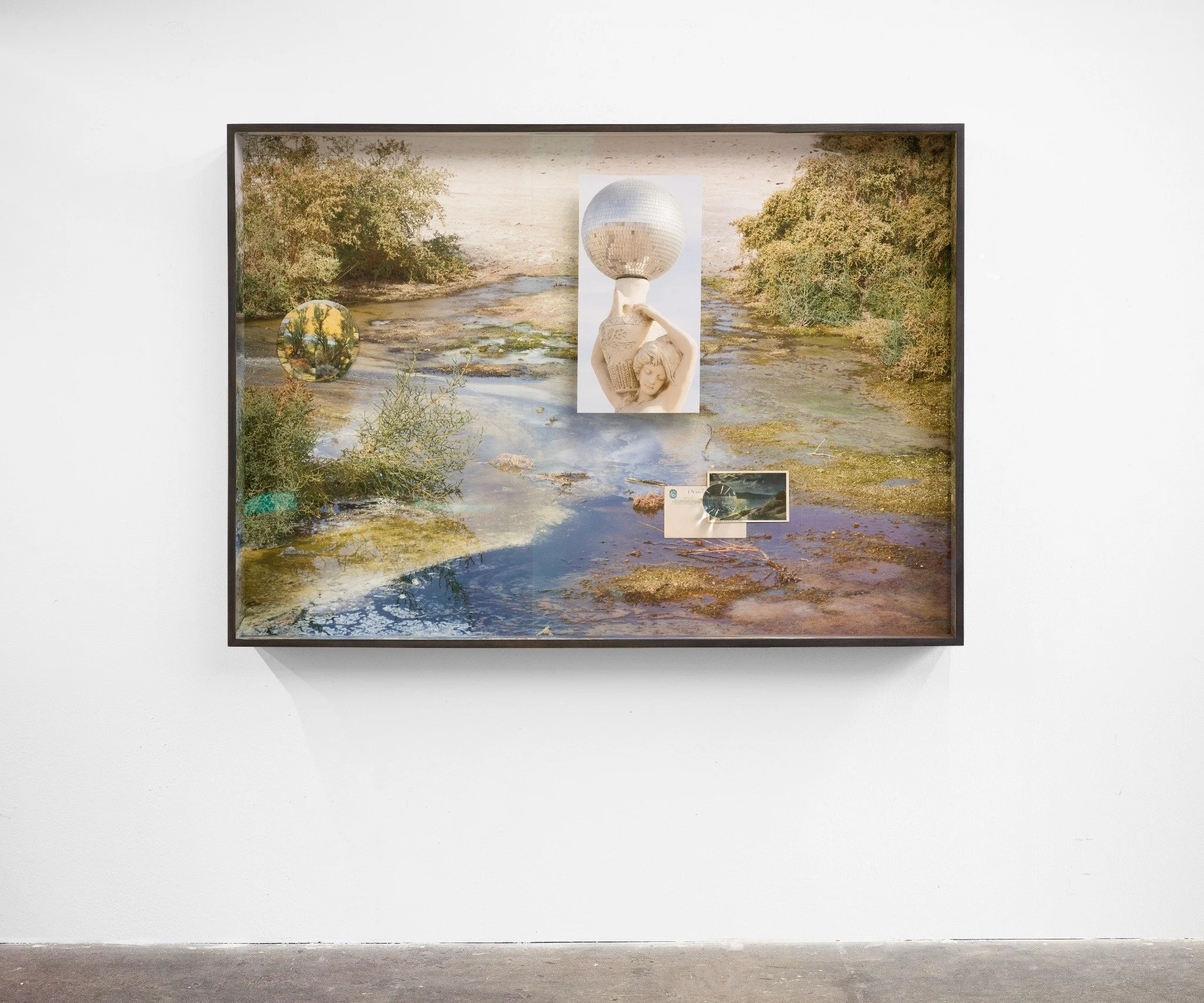
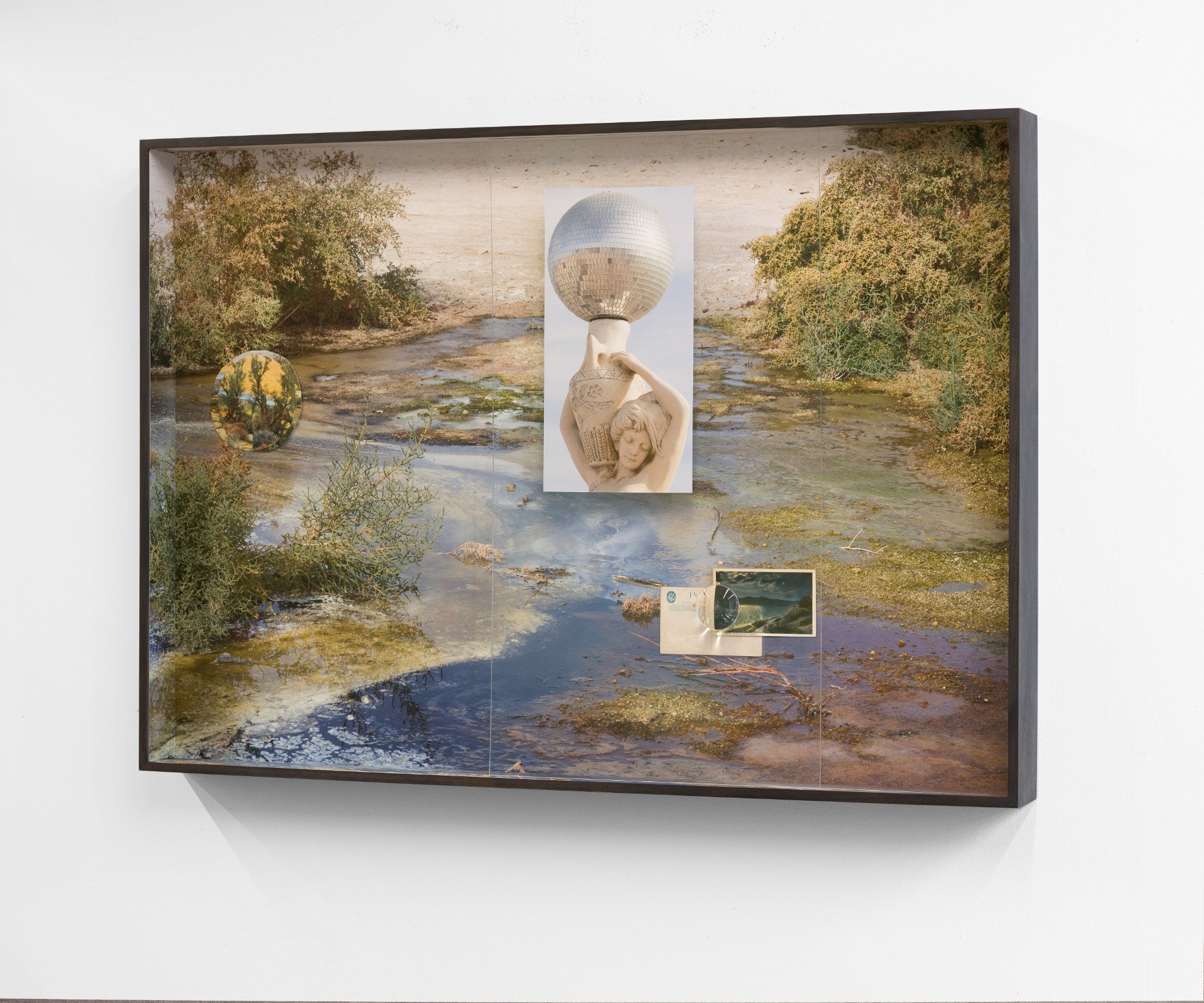
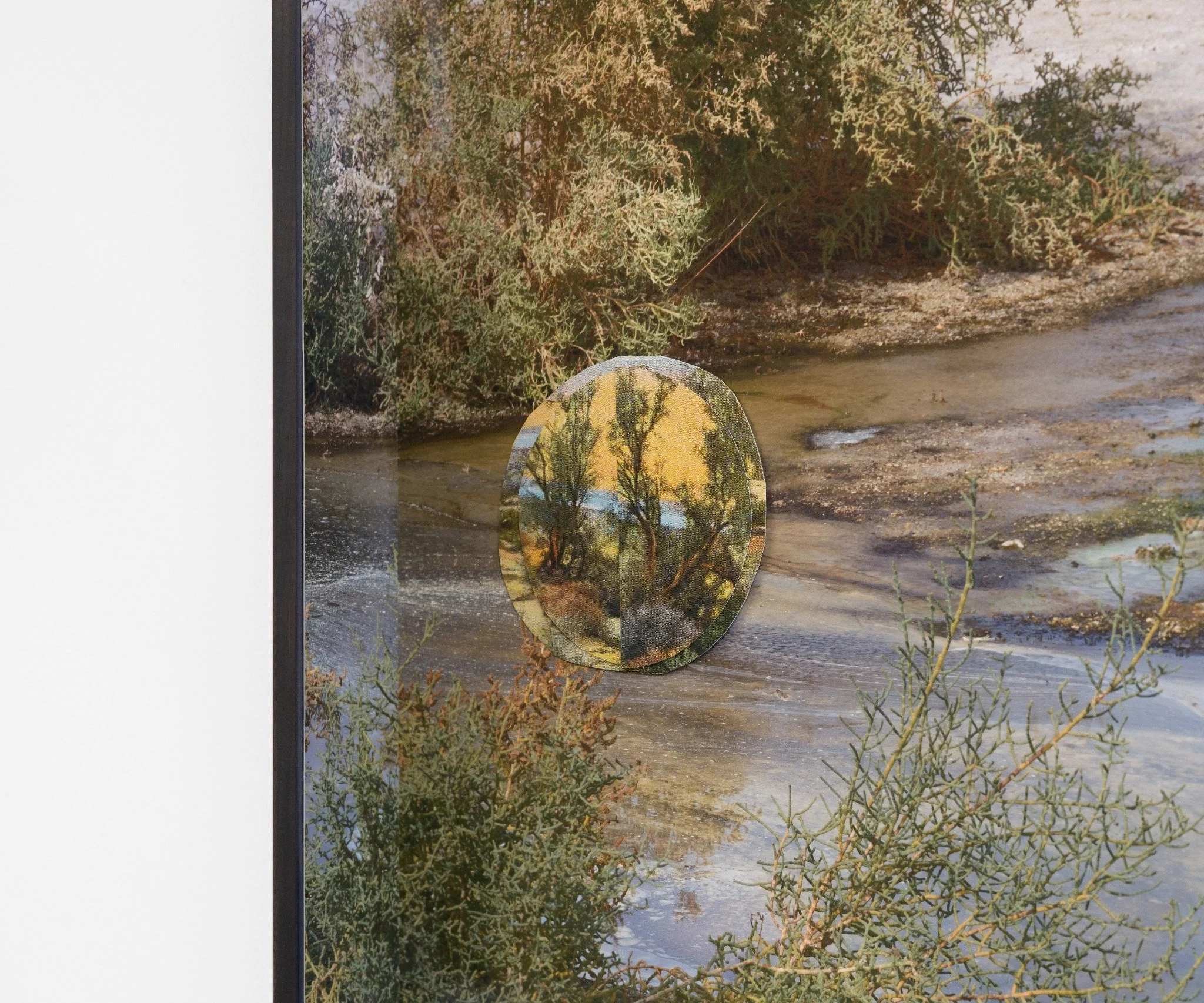
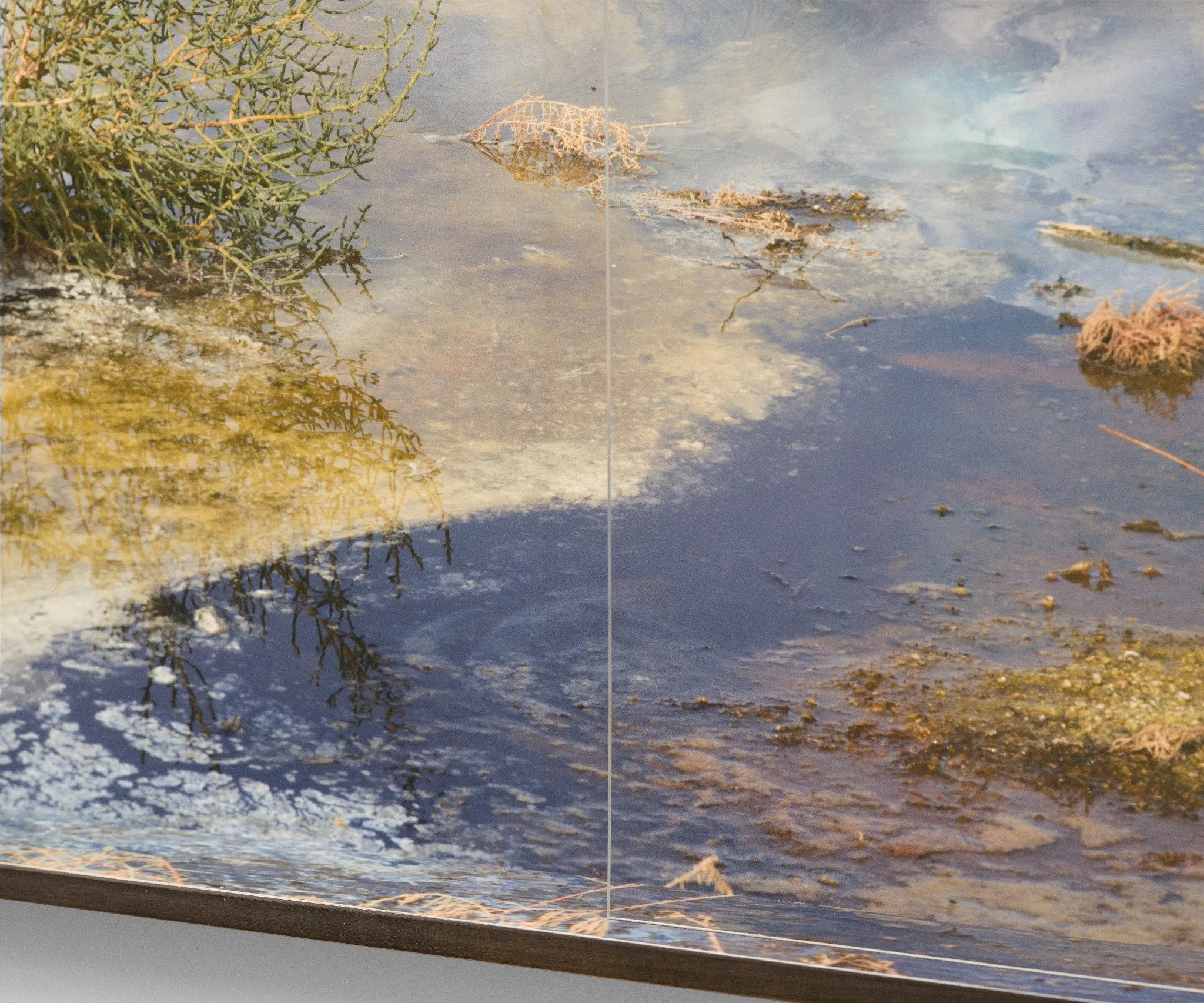
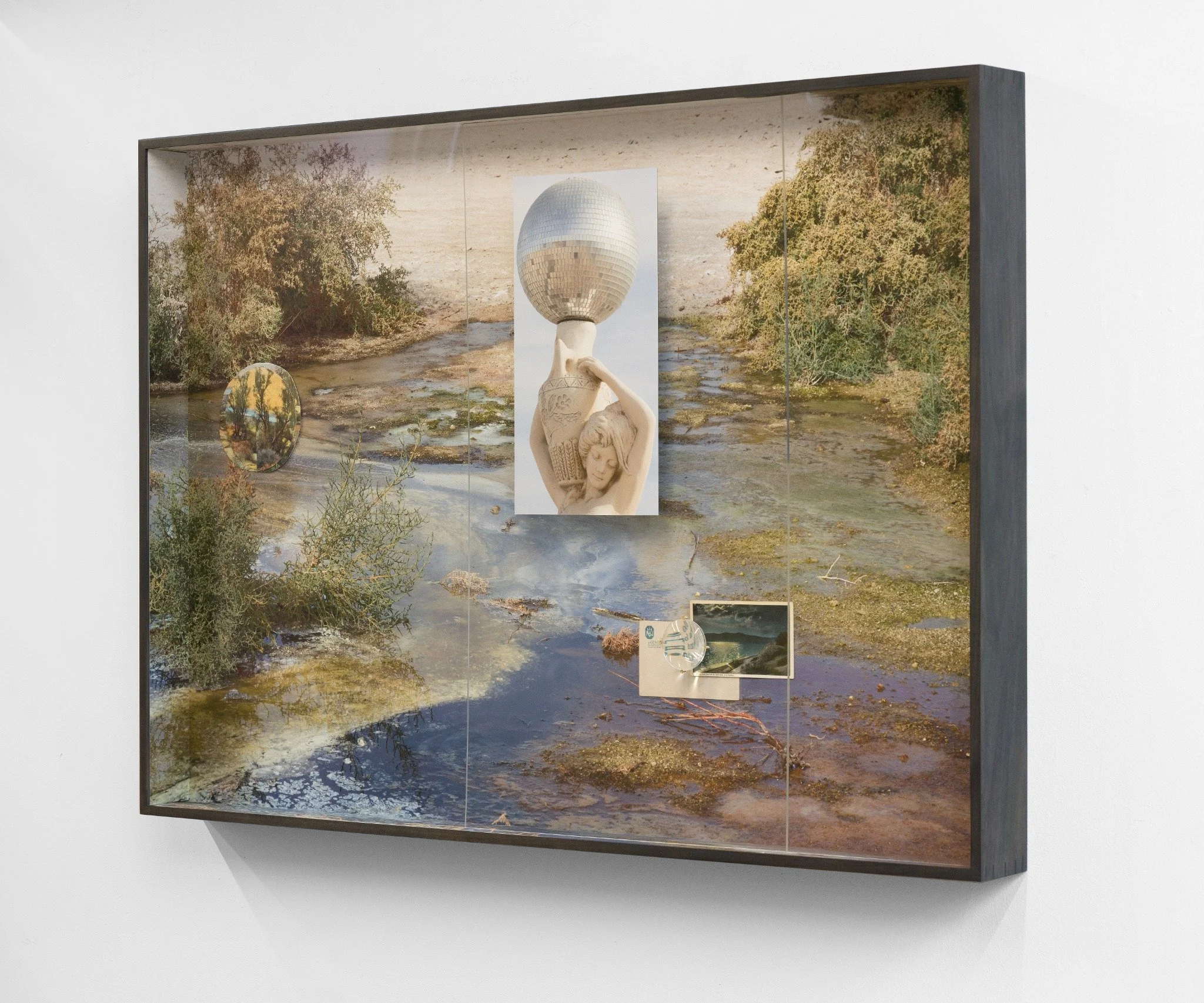
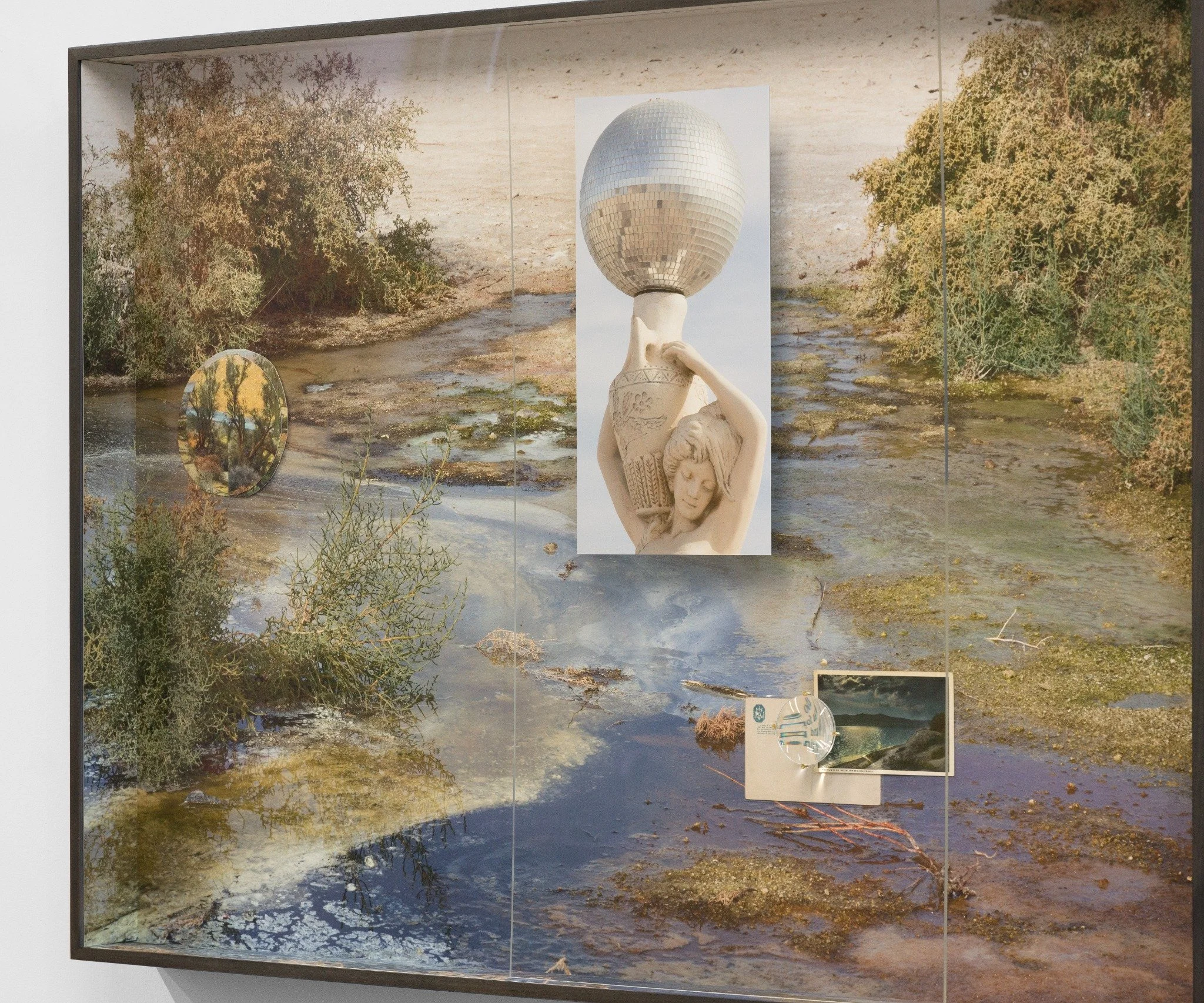
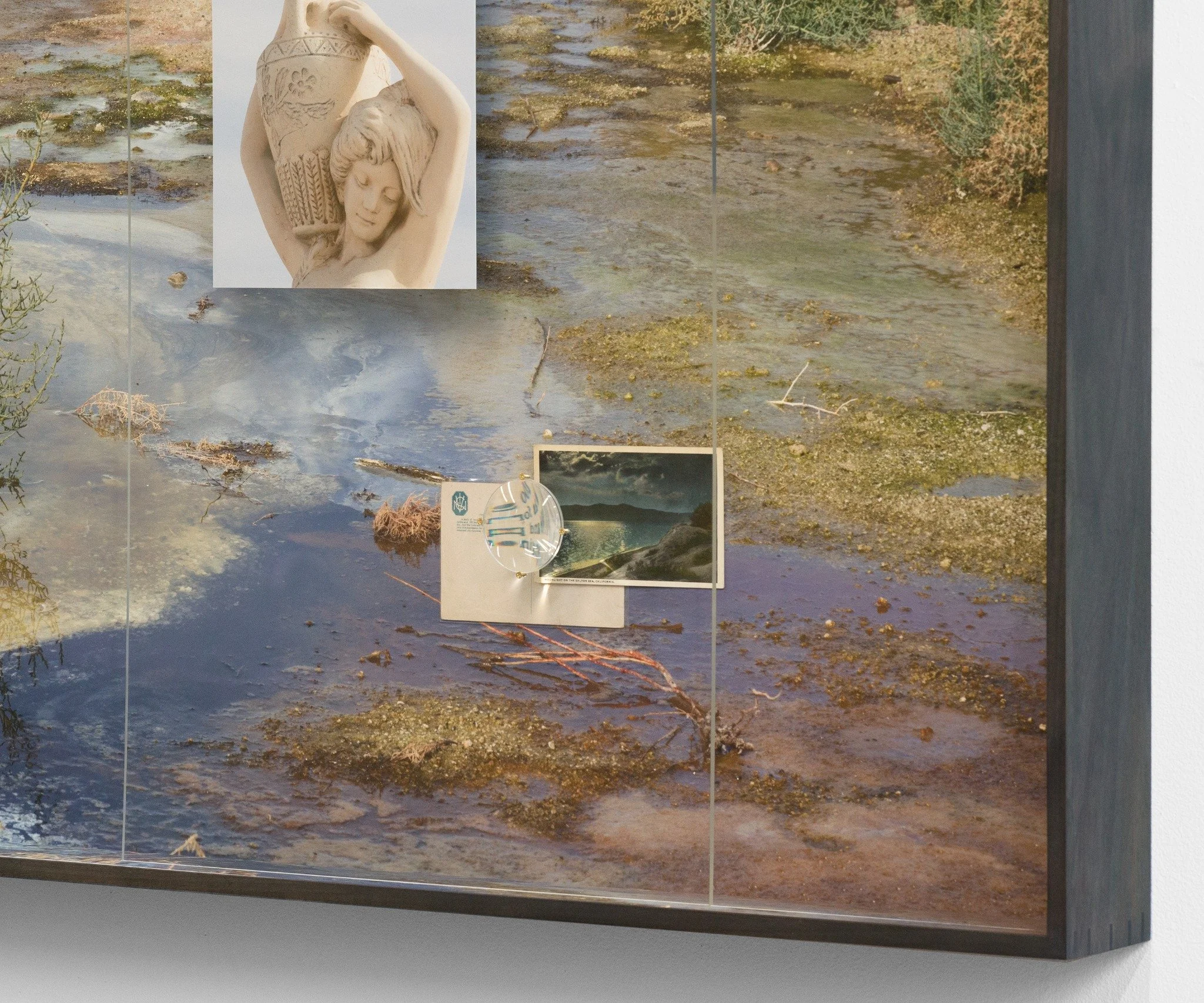
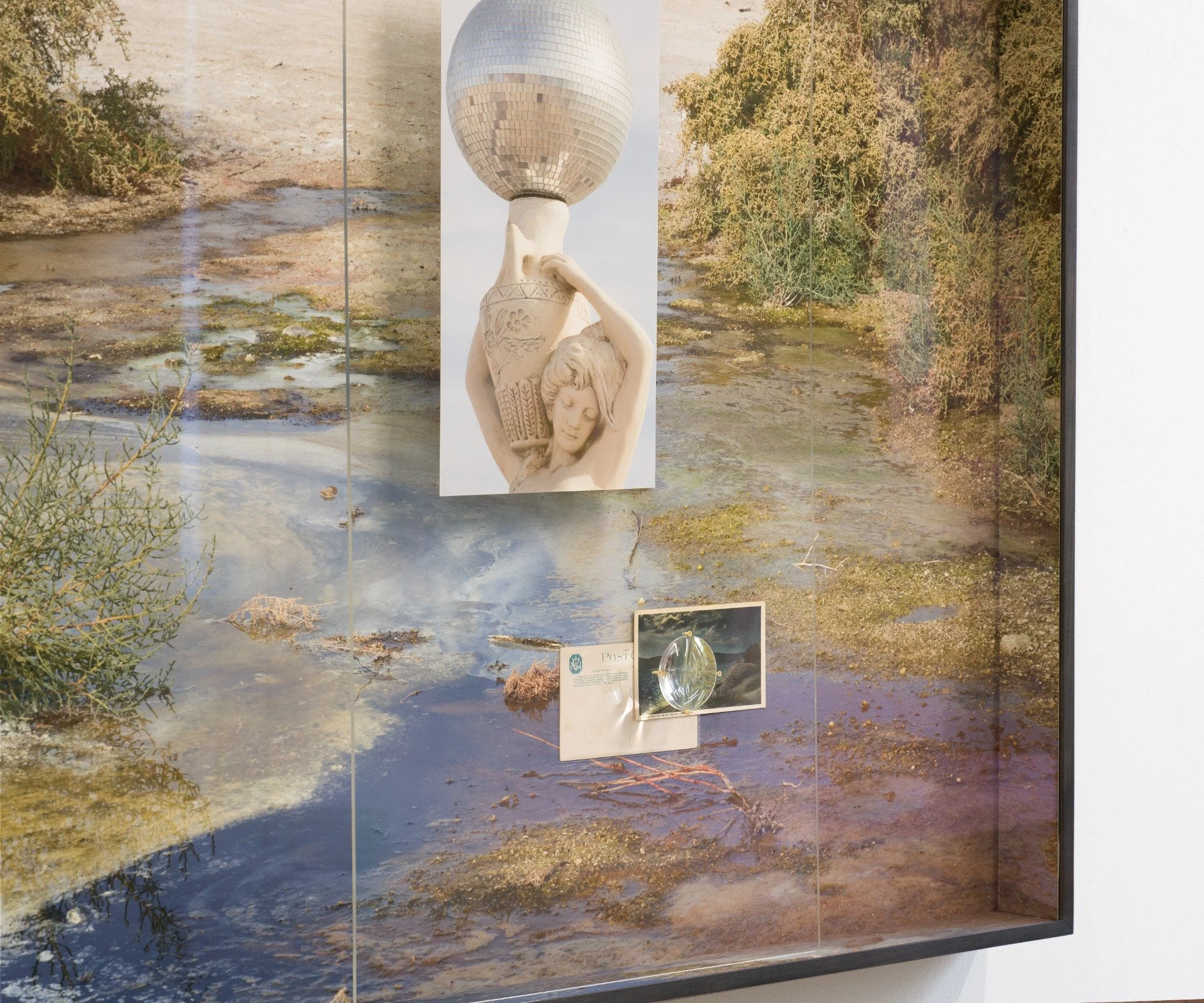
Desert Scene, Imperial Valley, California, 2026
Archival pigment print mounted on Dibond, vintage postcard, water jet cut stones, gold pigment, metal, sandstone, stainless steel, polished Optium Museum Acrylic, custom stained walnut frame
82 × 62 × 4 in.
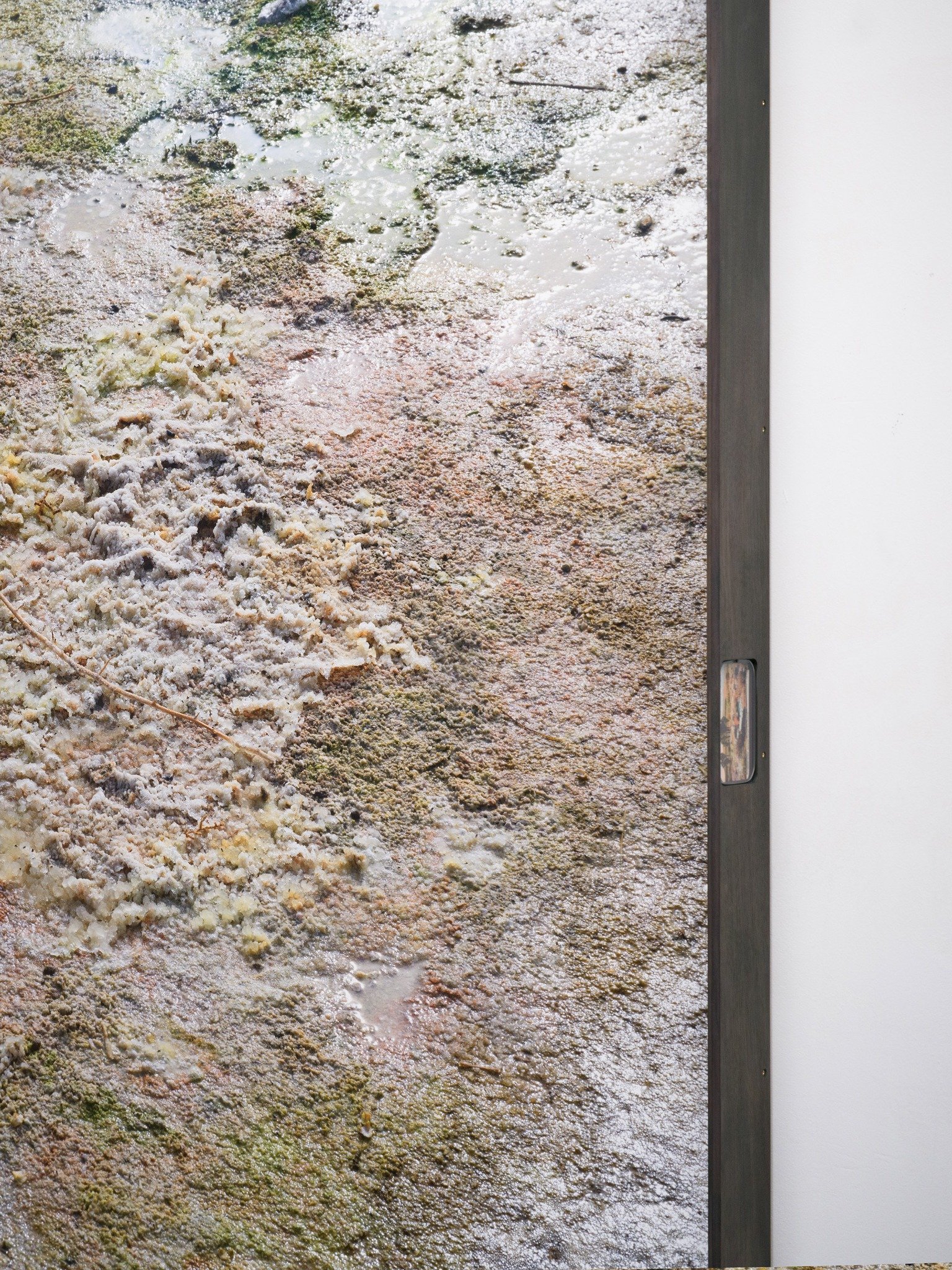
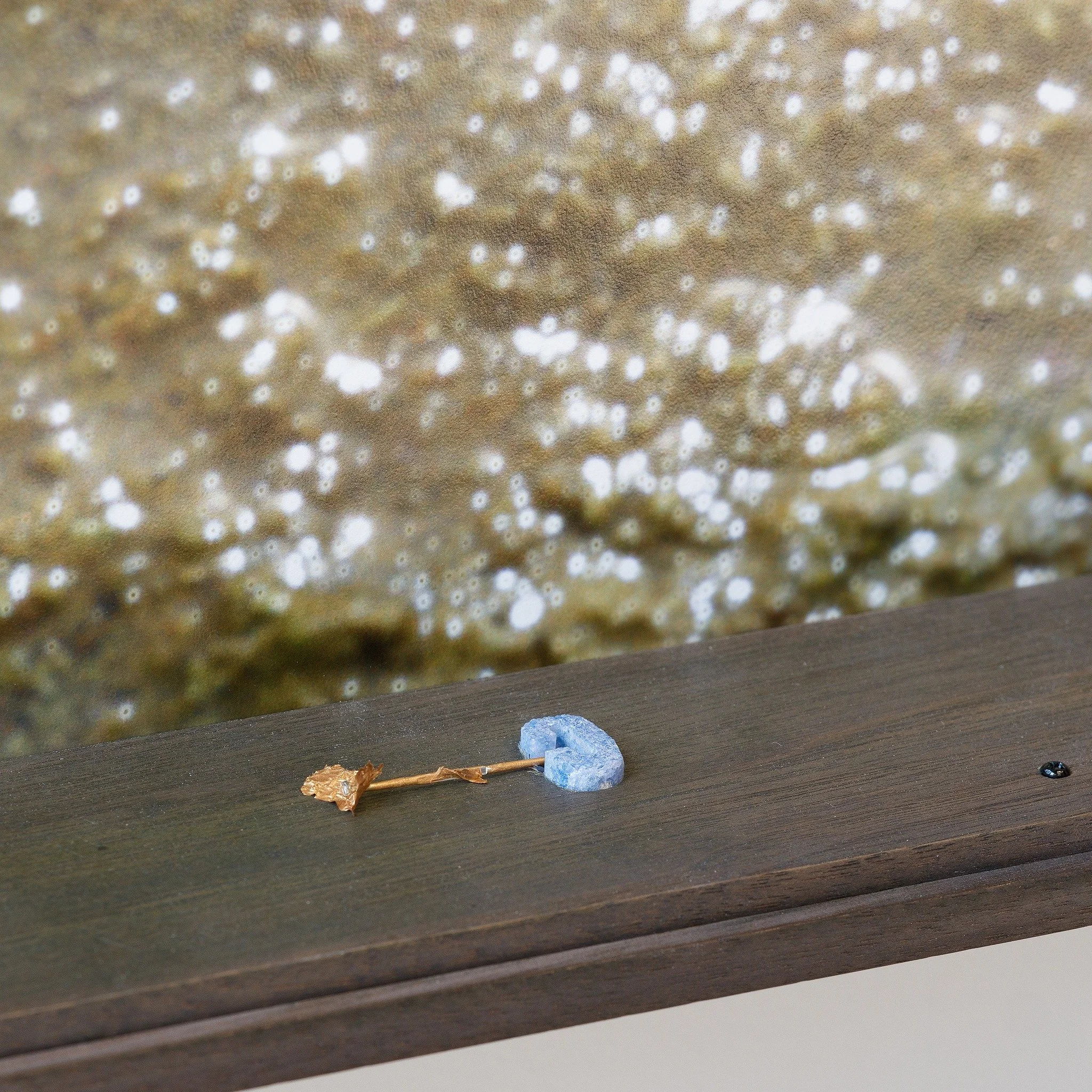
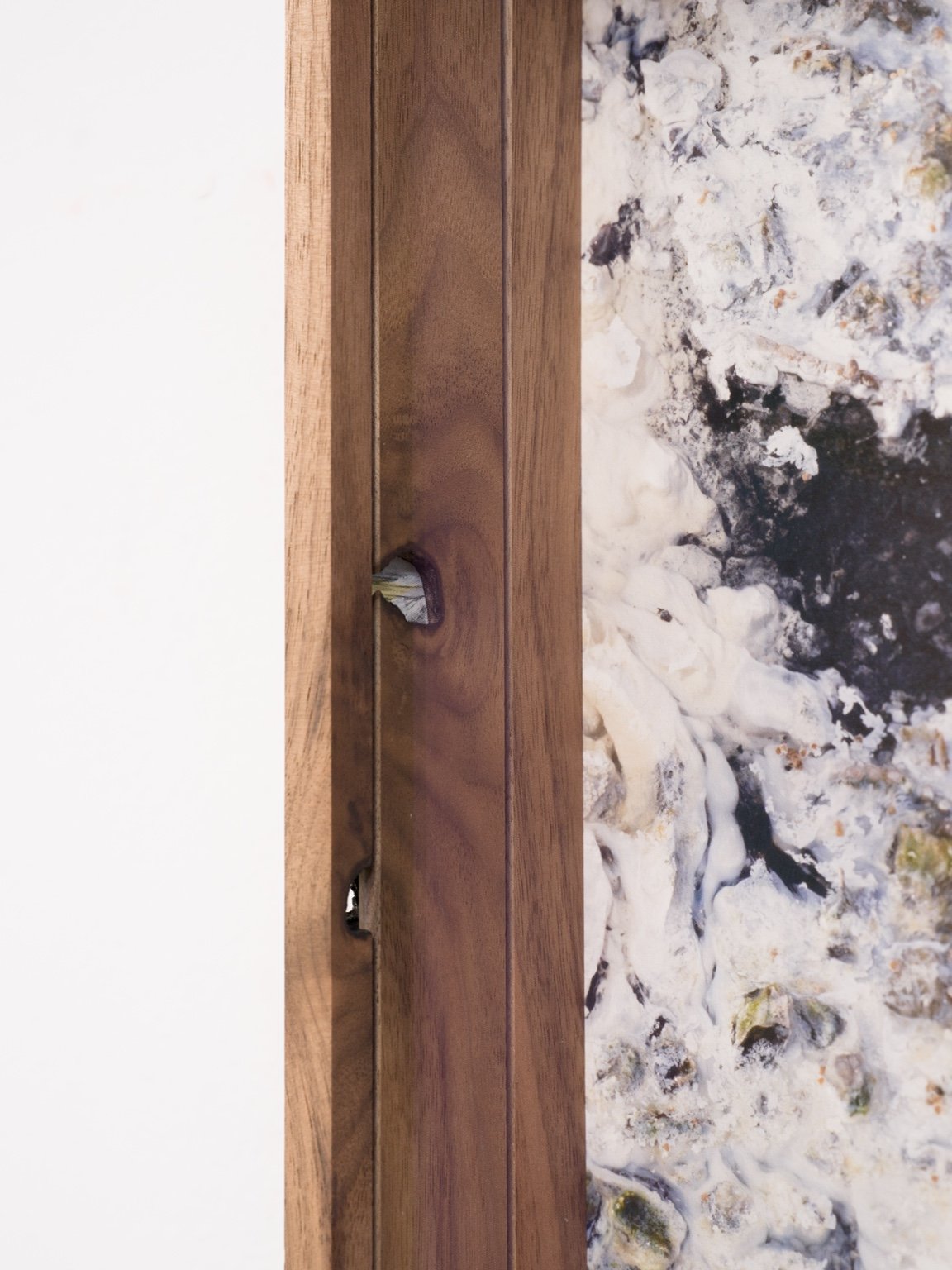
The title is taken from an early postcard of the Imperial Valley, set into the side of the frame where it can only be seen by walking along the wall. The photograph shows salt crust at the Salton Sea.
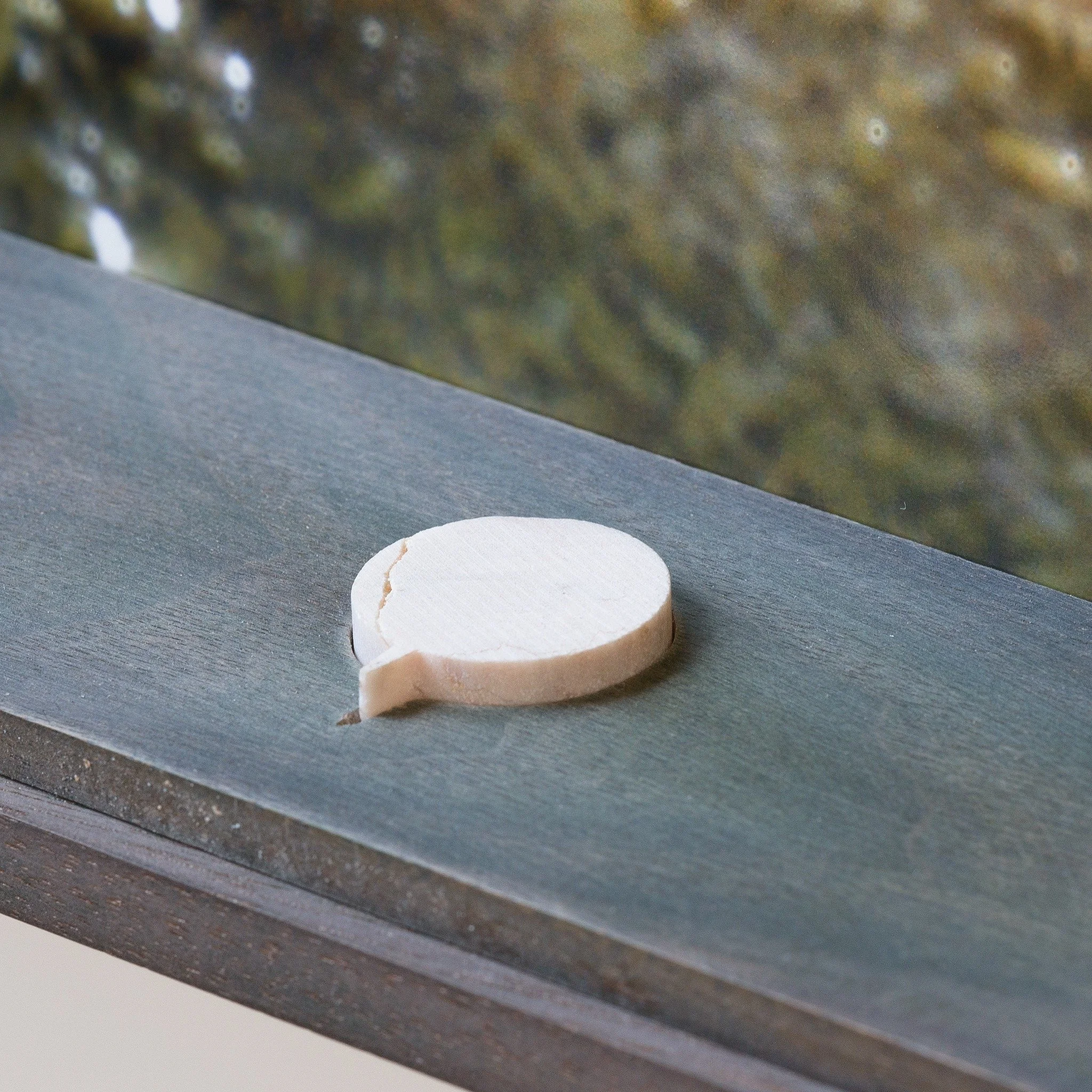
The objects inlaid in the frame are sediment from years of studio life: pieces cut at the wrong size, a waterjet cut that went astray, a cracked piece of sandstone, some of them my own and some discarded by artists I share the studio with. I set them into the frame because their shapes recall the infrastructure around the Salton Sea, the wells, pipes, and water tanks that feed and drain it. Seen from above, like the salt crust in the photograph, they sit along the edge as a quiet map of what surrounds the basin.
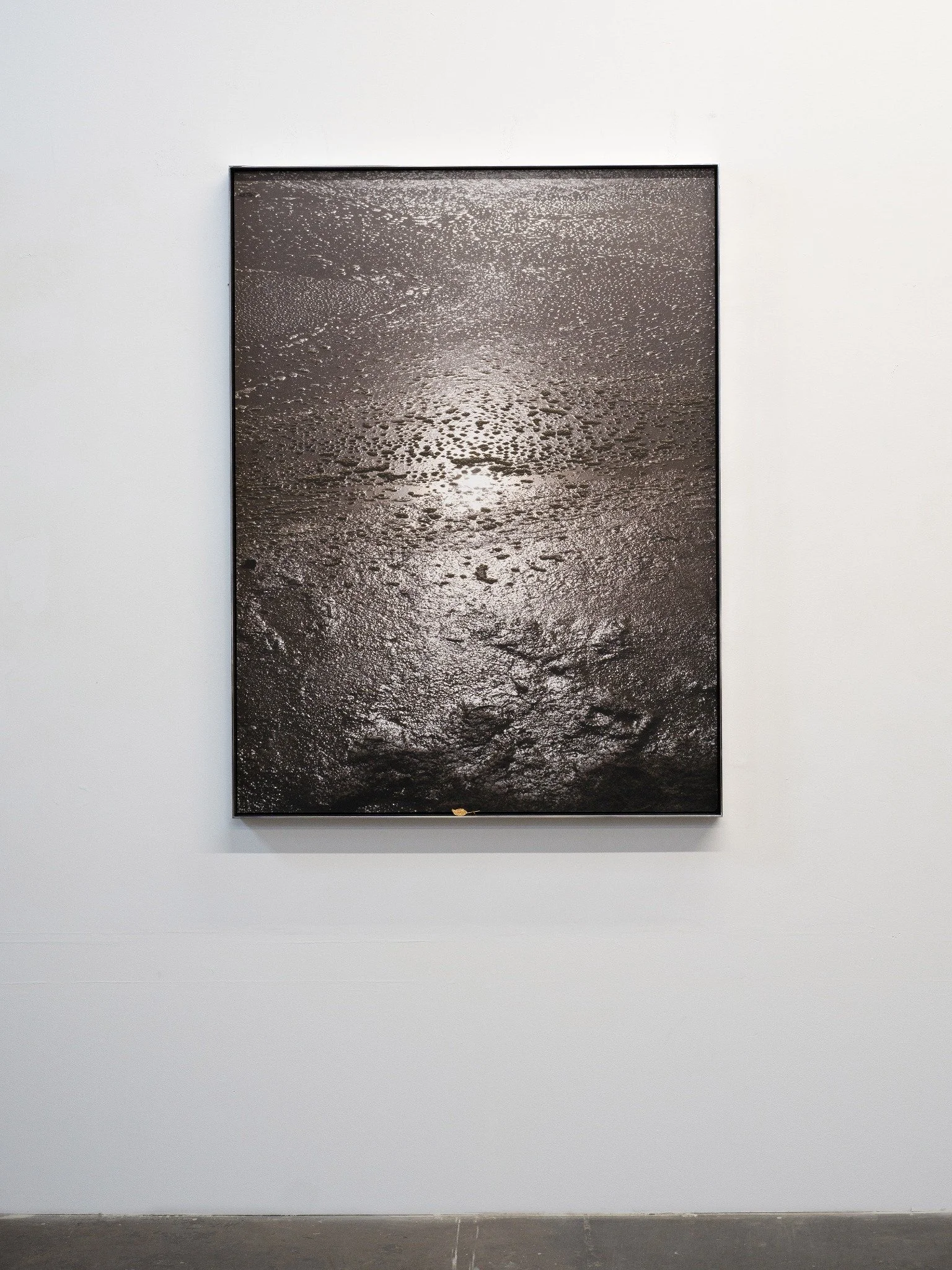
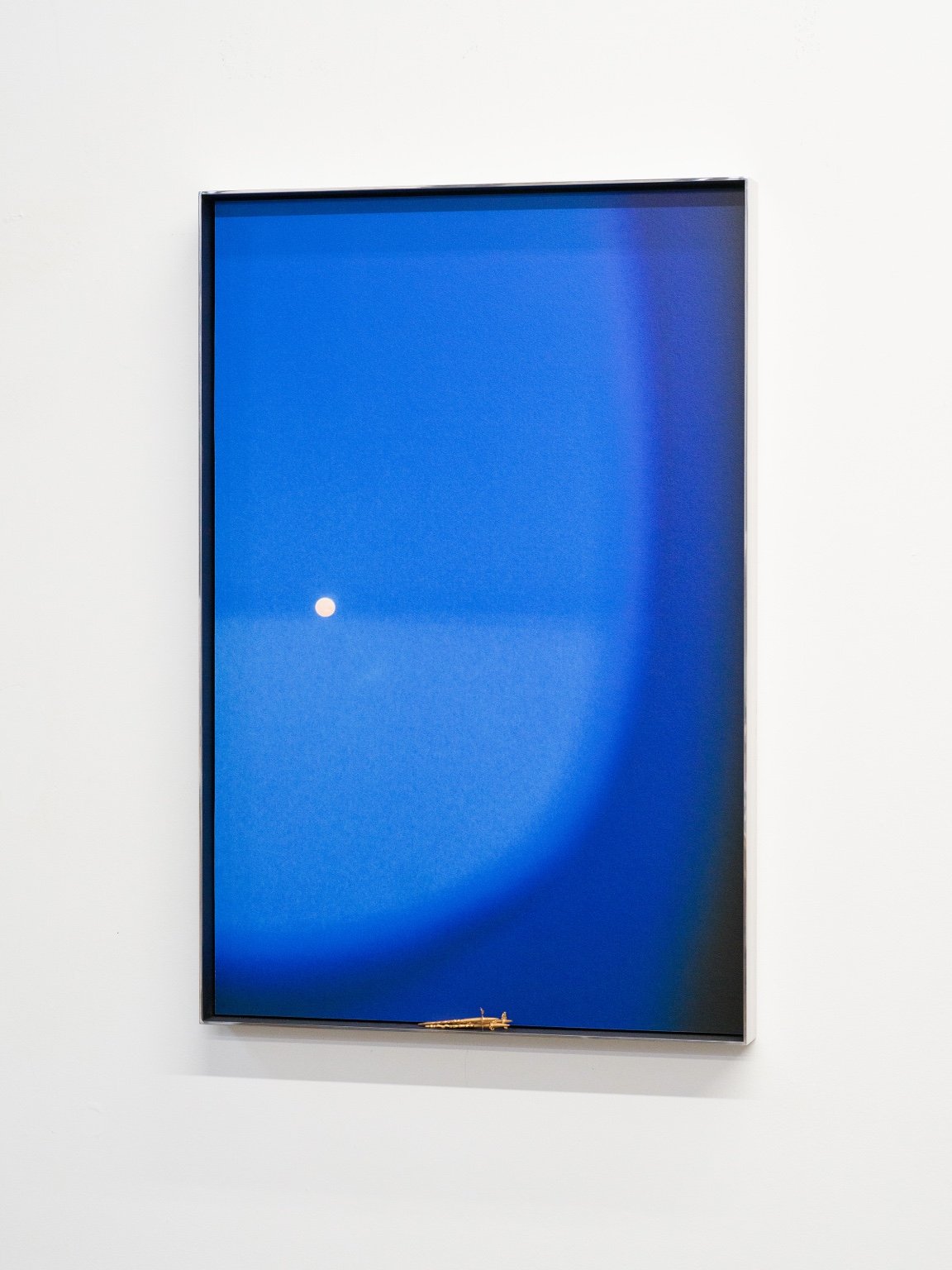
Interference, Saturated. Salton Sea – 001, 2026
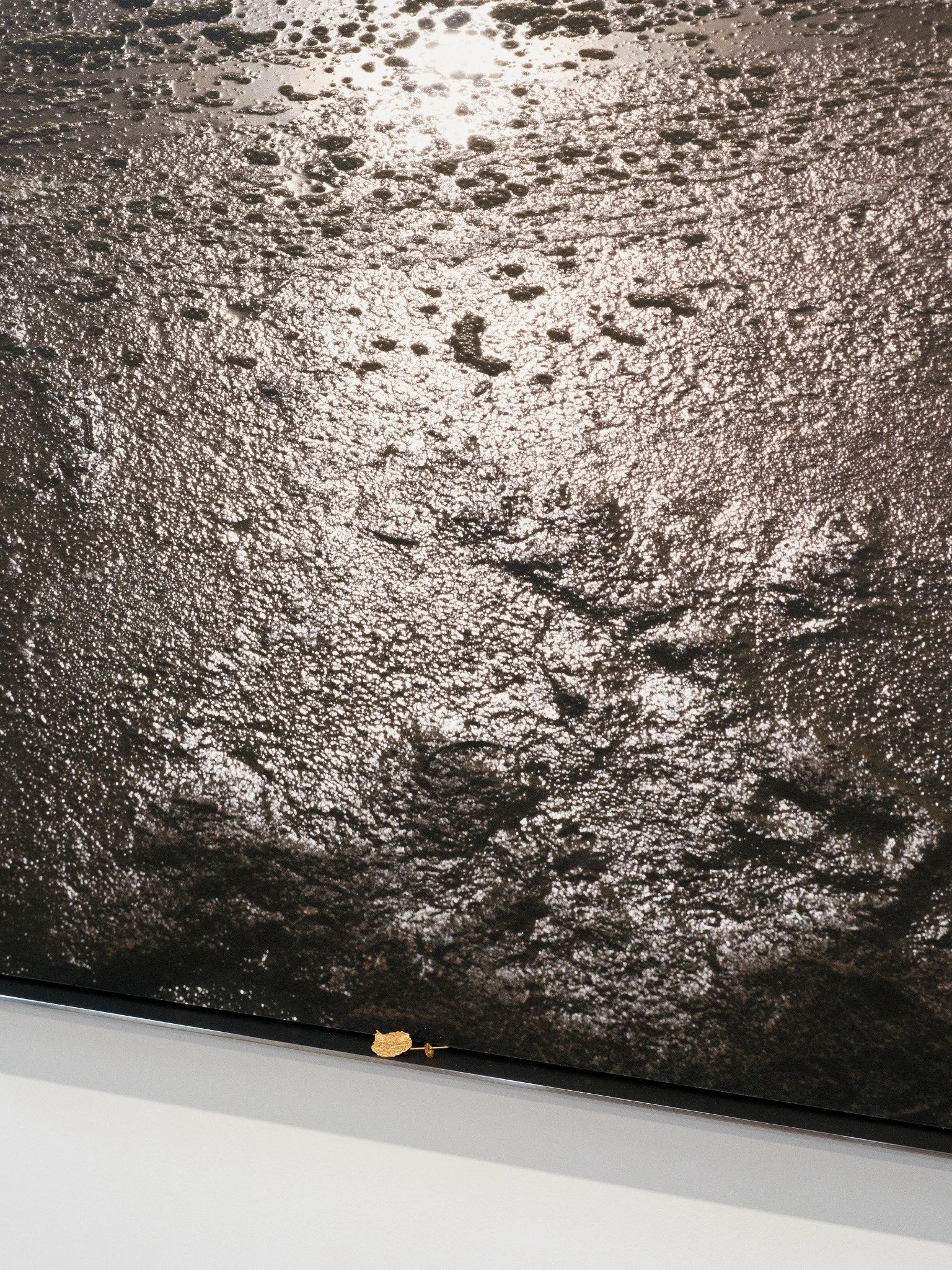
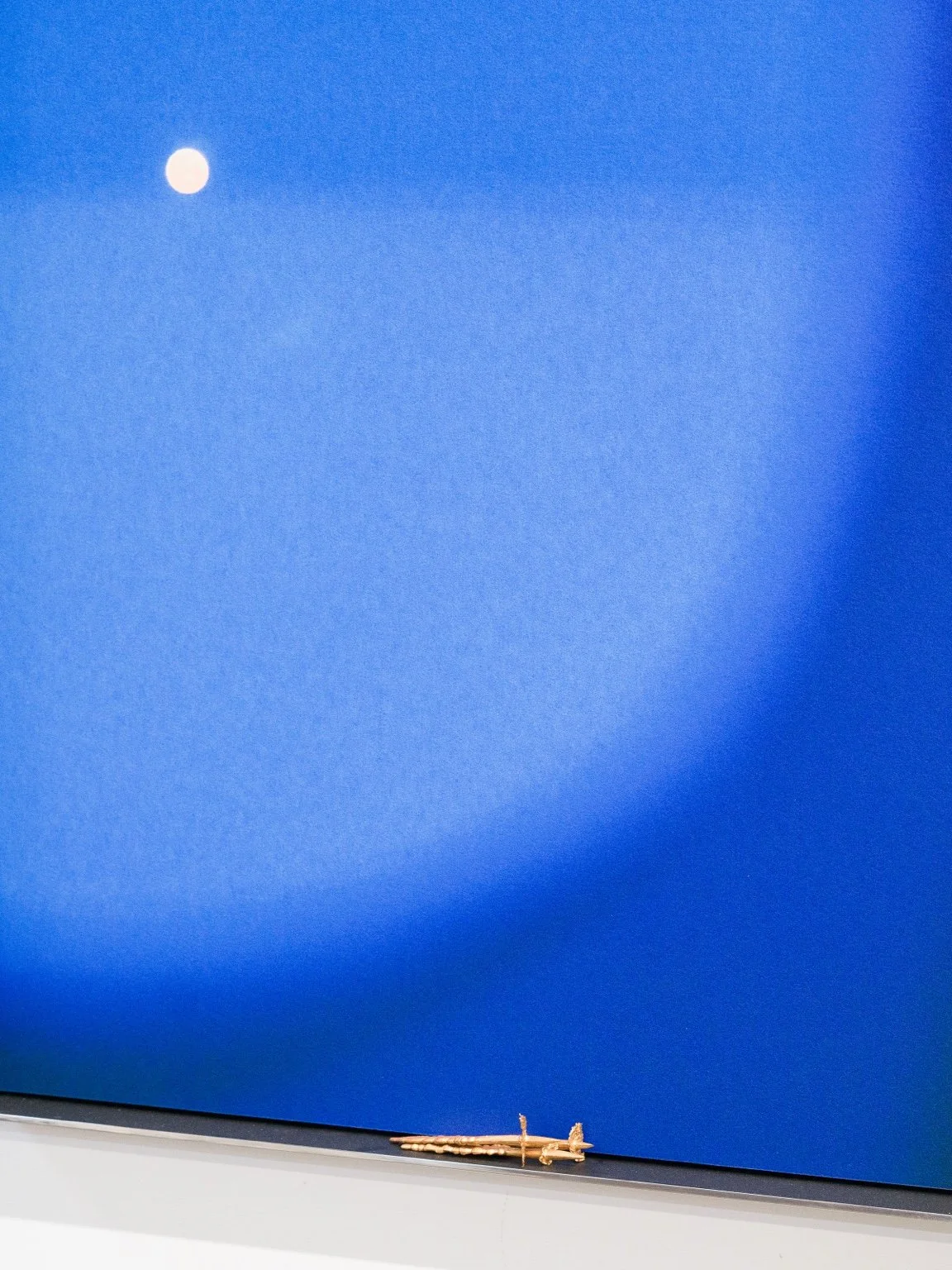
Archival pigment print mounted on Dibond, gilded Soviet badge, polished welded aluminum frame
42 × 32 × 2 in.
Part of Interference, a decade-long series photographed at the Salton Sea. Midday sun on wet shoreline mud burns the center of the frame to white while the surrounding sediment stays precisely rendered.
On the bottom edge of the frame rests a Soviet badge, covered again and again in gold pigment until its emblem survives only as a trace. The pigment dried on styrofoam and took its final shape there, the way a print takes the impression of its plate. Placed at the edge of the Salton image, it carries the other sea's history as residue.
Photographic surface and vintage Soviet badge.
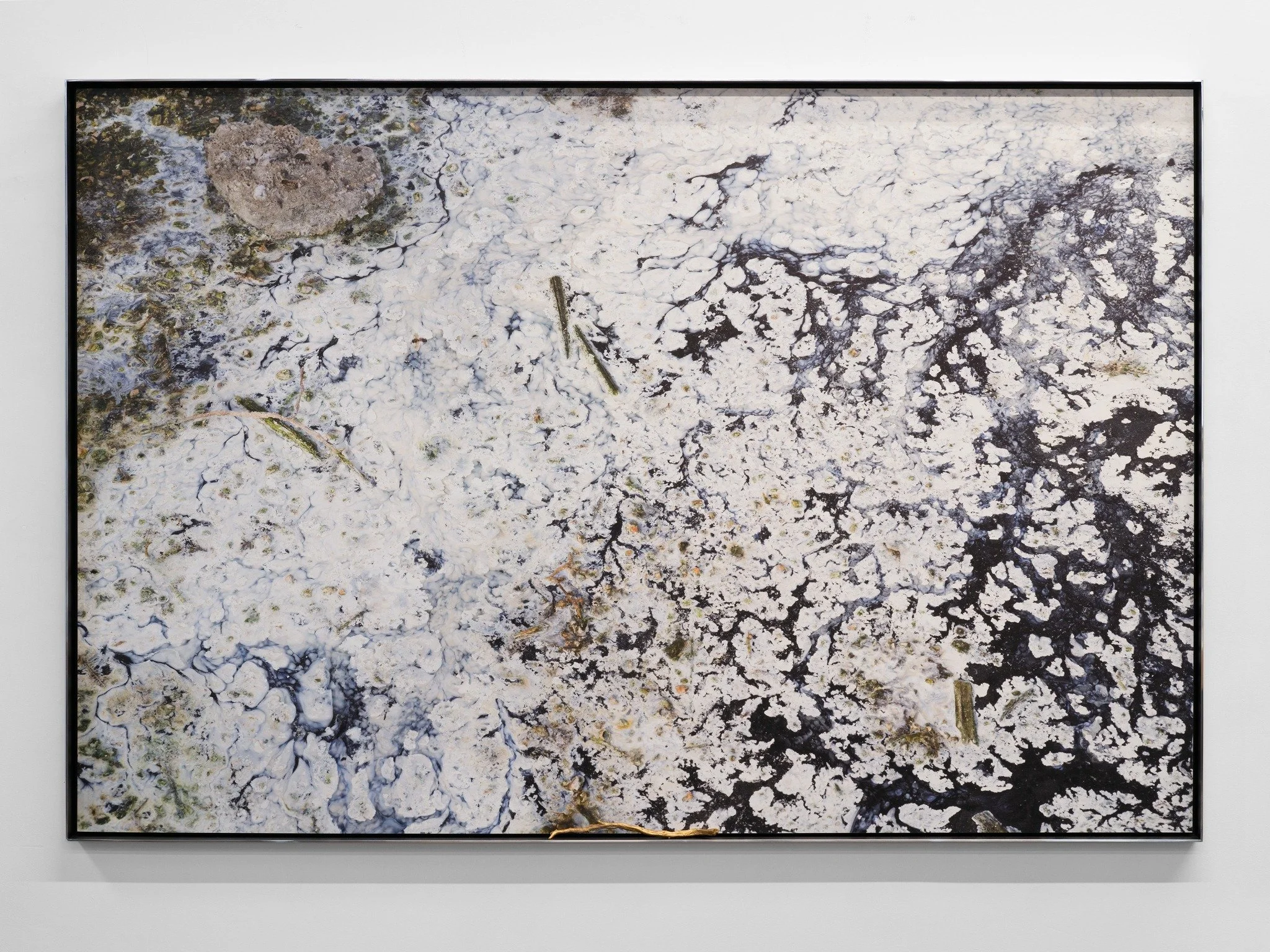
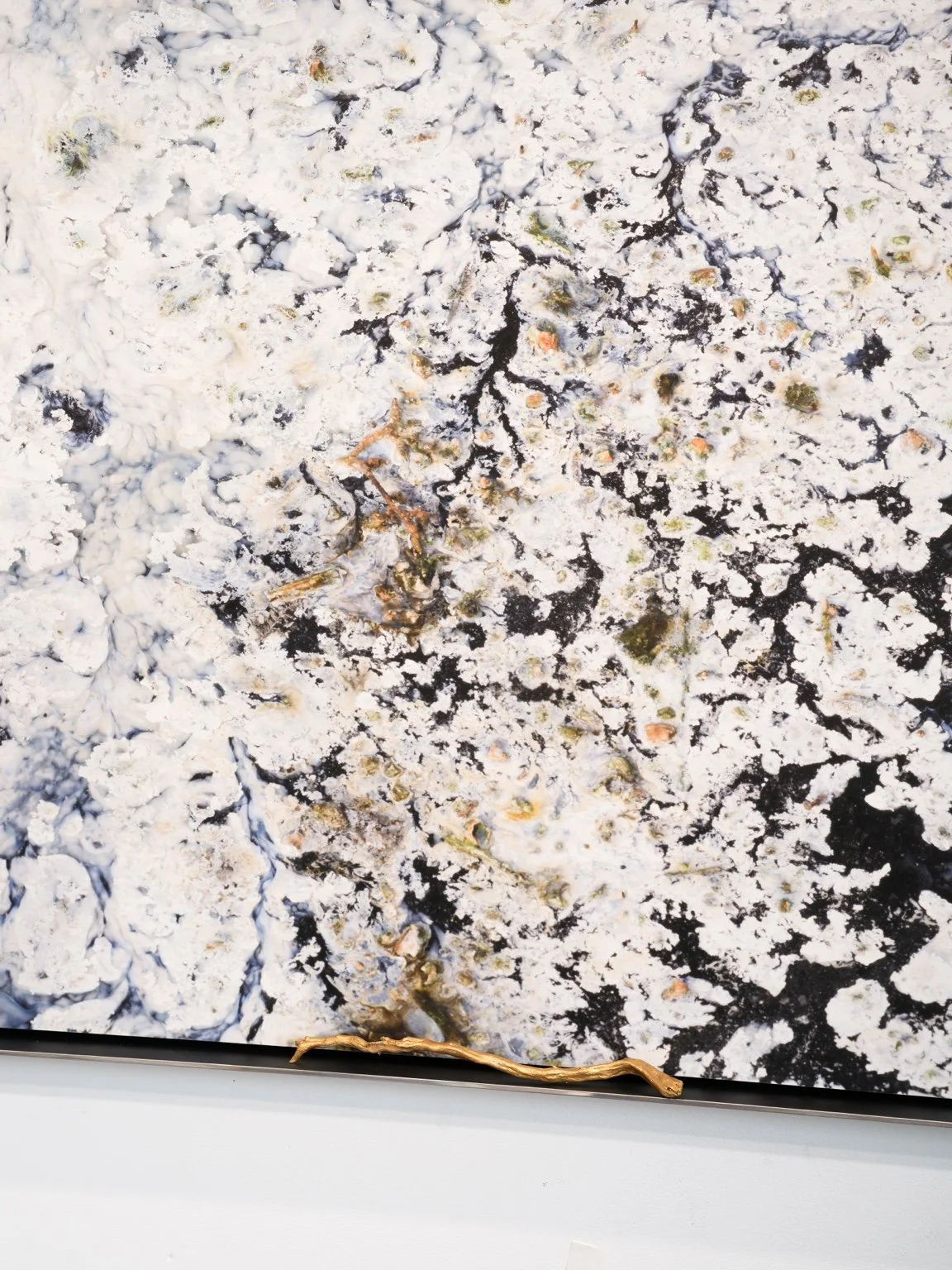
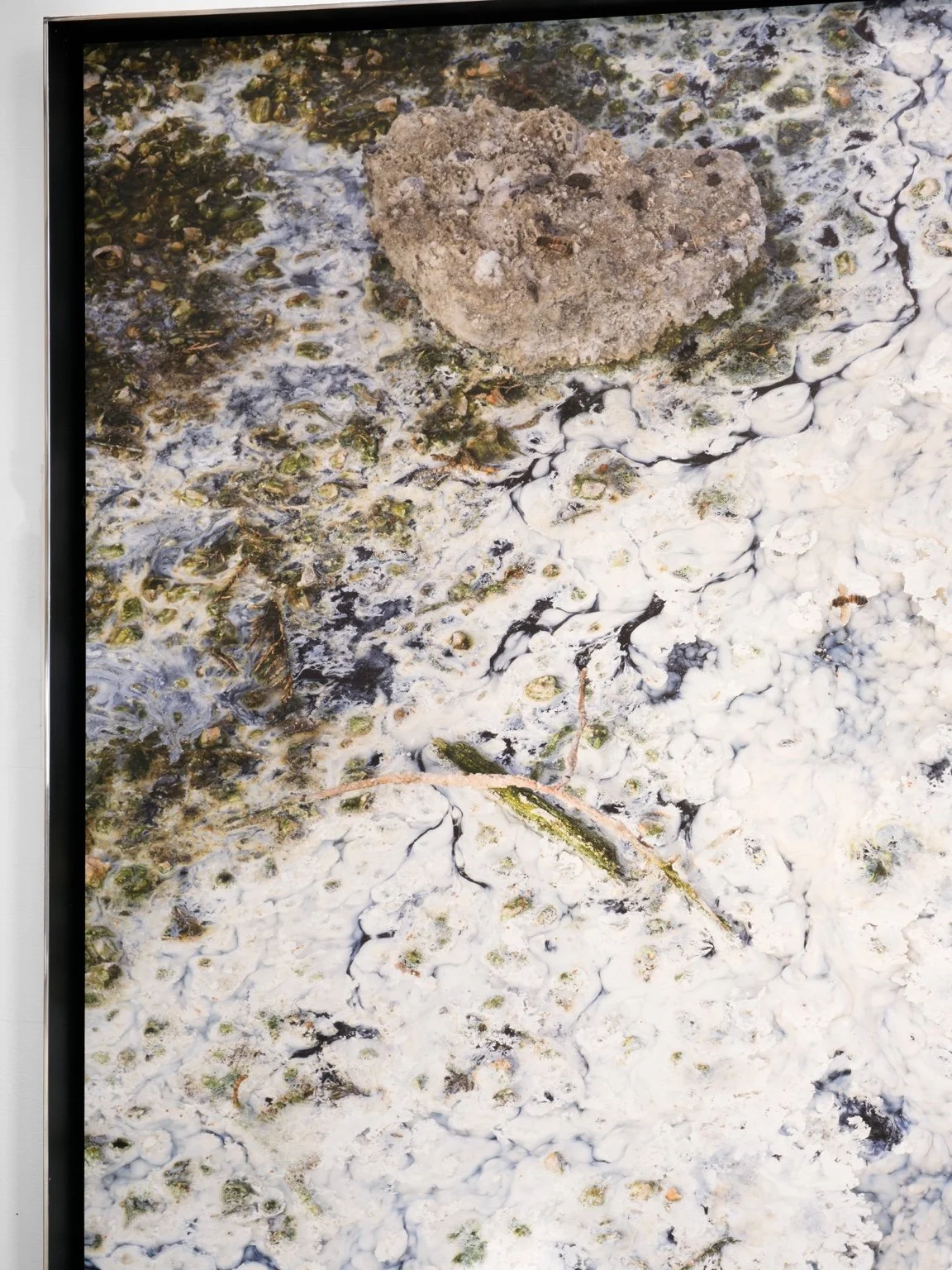
Interference, Saturated. Salton Sea – 002, 2026
Archival pigment print mounted on Dibond, gilded found branch, polished welded aluminum frame
42 × 62 × 2 in.
Part of Interference. Photographed from directly above, the Salton Sea shoreline is a crust of accumulated minerals whose chemical reactions produce a texture close to Impressionist painting: blooms of white, veins of black, flecks of green and rust.
Caught in it are bees and other insects that drowned in the water, the only direct evidence in the image that this painterly waterscape is toxic. They are small enough to be missed. The work lives in that gap, where toxicity is made beautiful and the beauty is what draws the viewer closer. This seduction is the interference I work with. On the frame's ledge rests a dry branch I brought back from the Salton shore, covered in gold.
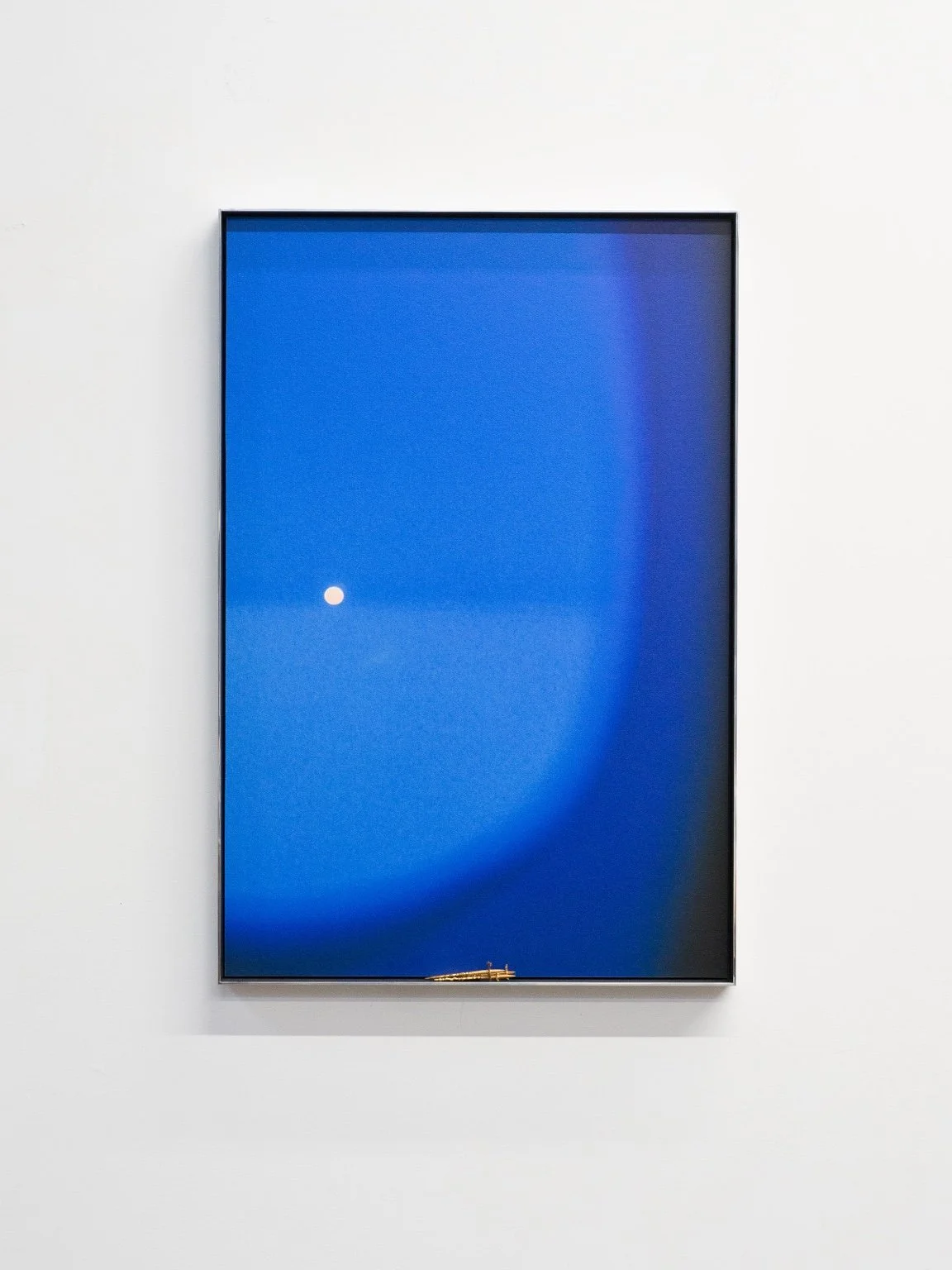
The Farthest Window, 2026
Archival pigment print mounted on Dibond, polished welded aluminum frame.
32 × 22 × 2 in.
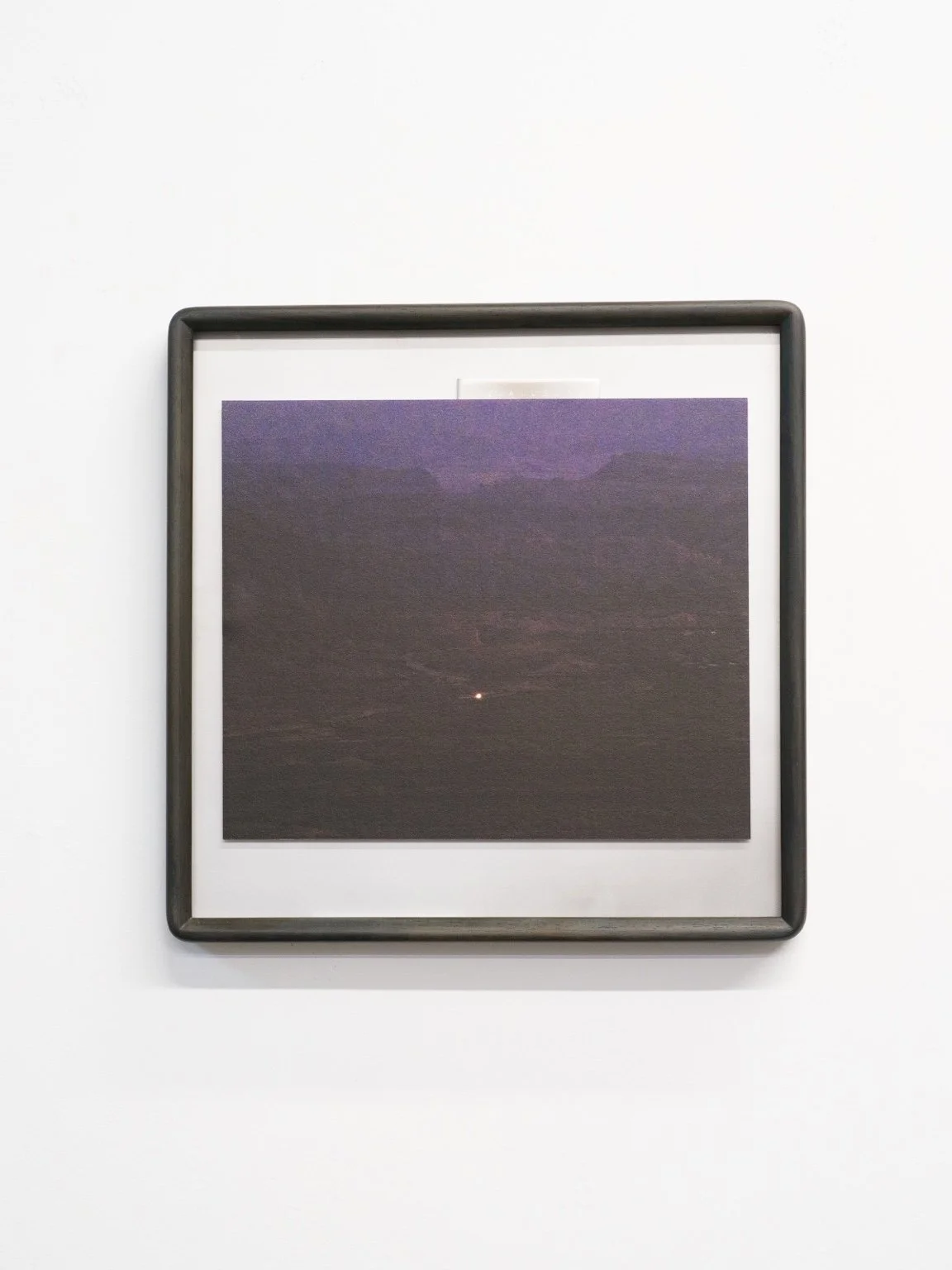
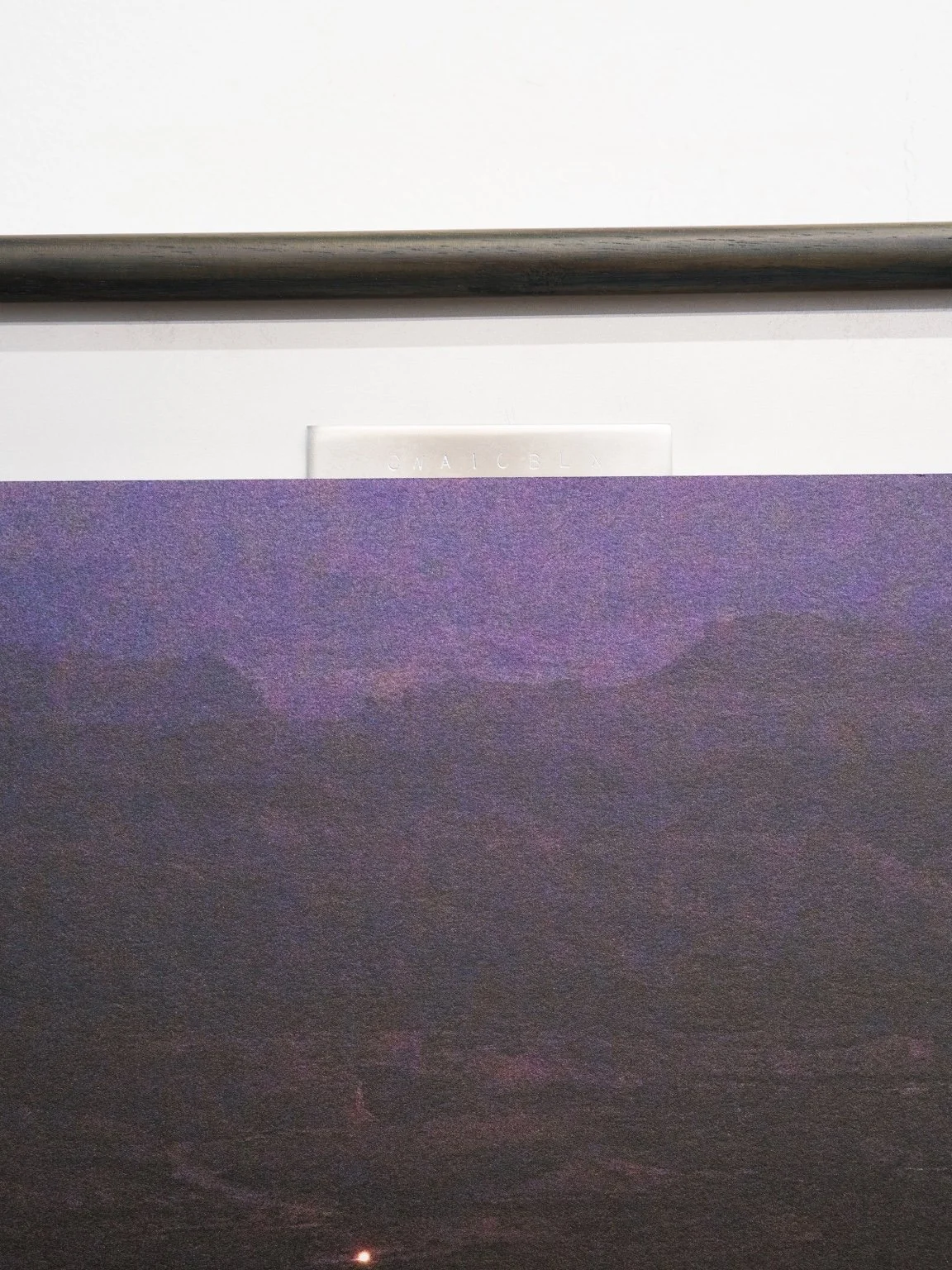
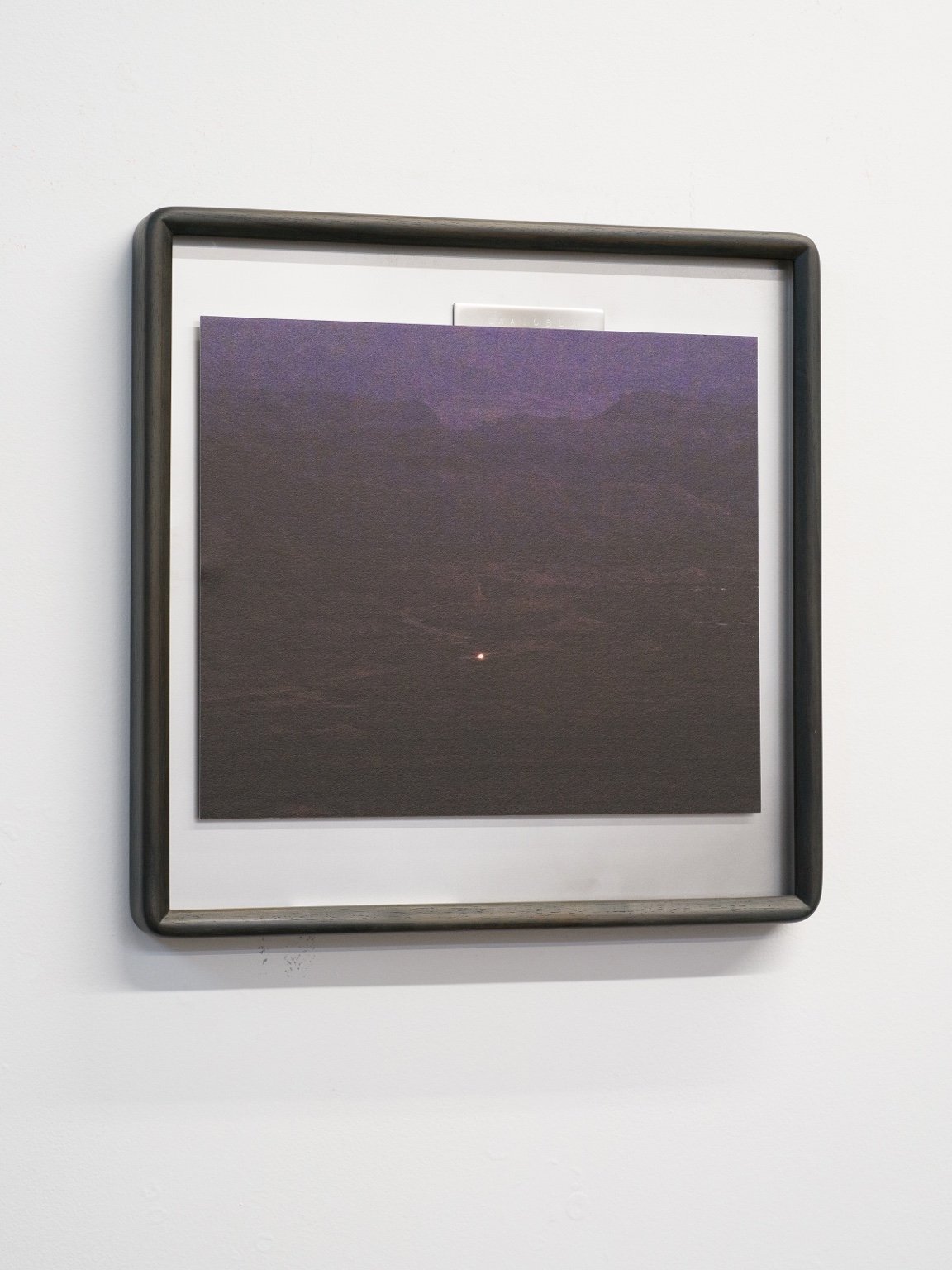
Source Unknown (CWAICBLX), 2026
Archival pigment print, hand-stamped aluminum plate, matte aluminum, stained rosewood frame.
16 × 16 × 2 in.
Floating Seas, 2026
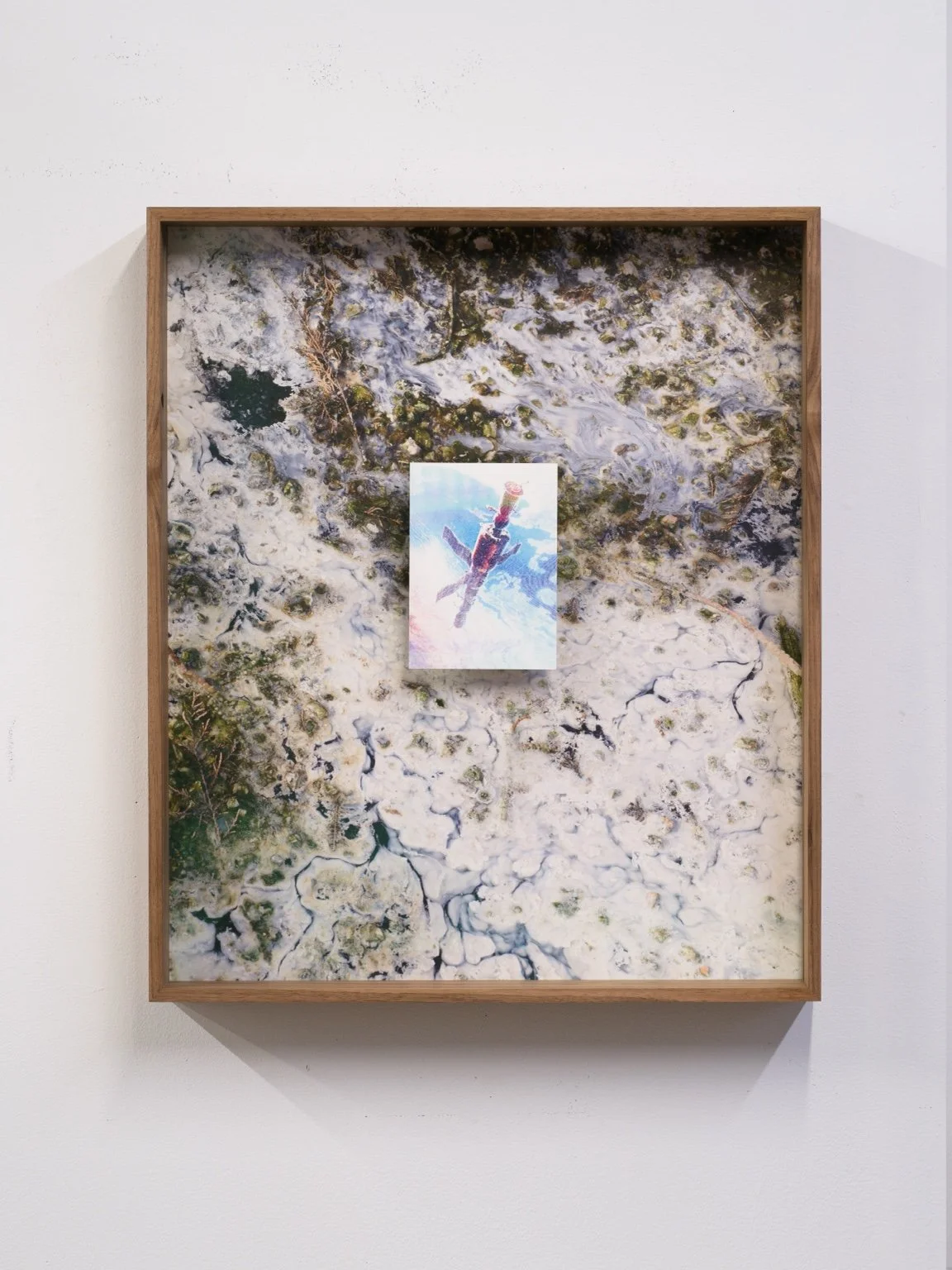
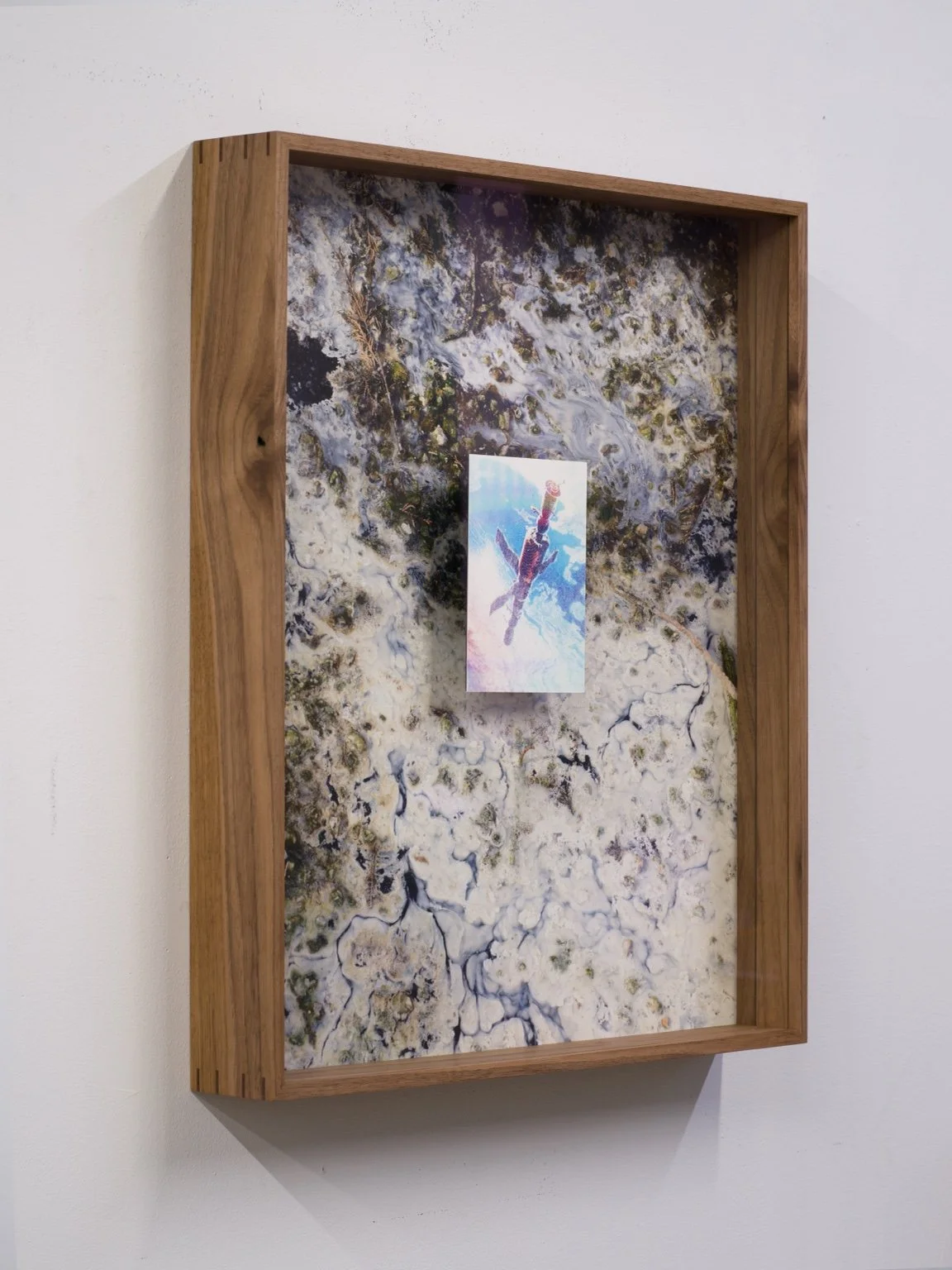
Archival pigment print mounted on Dibond, scanned Soviet postcard, Optium Museum Acrylic, walnut
28 × 24 × 6 in.
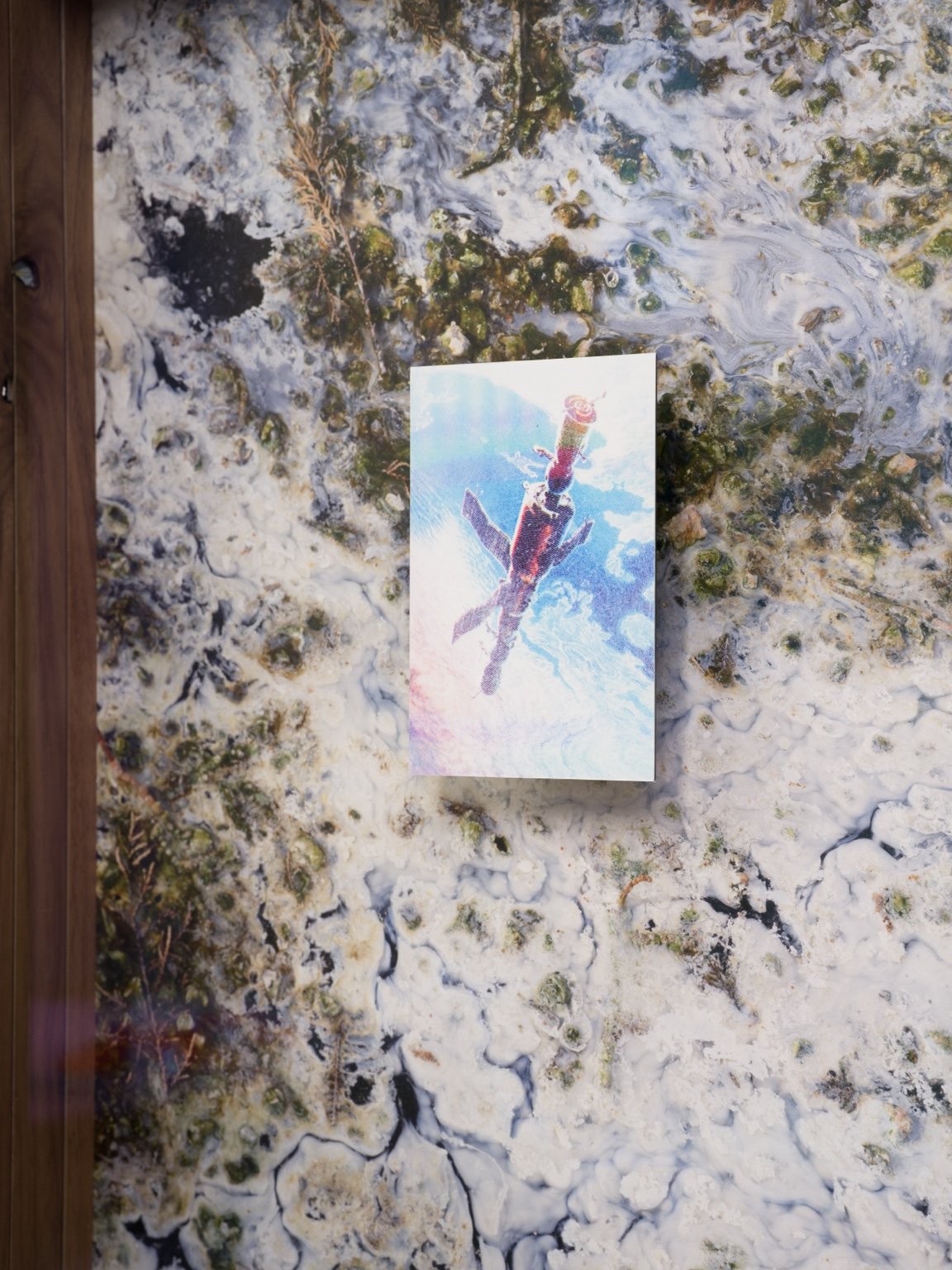
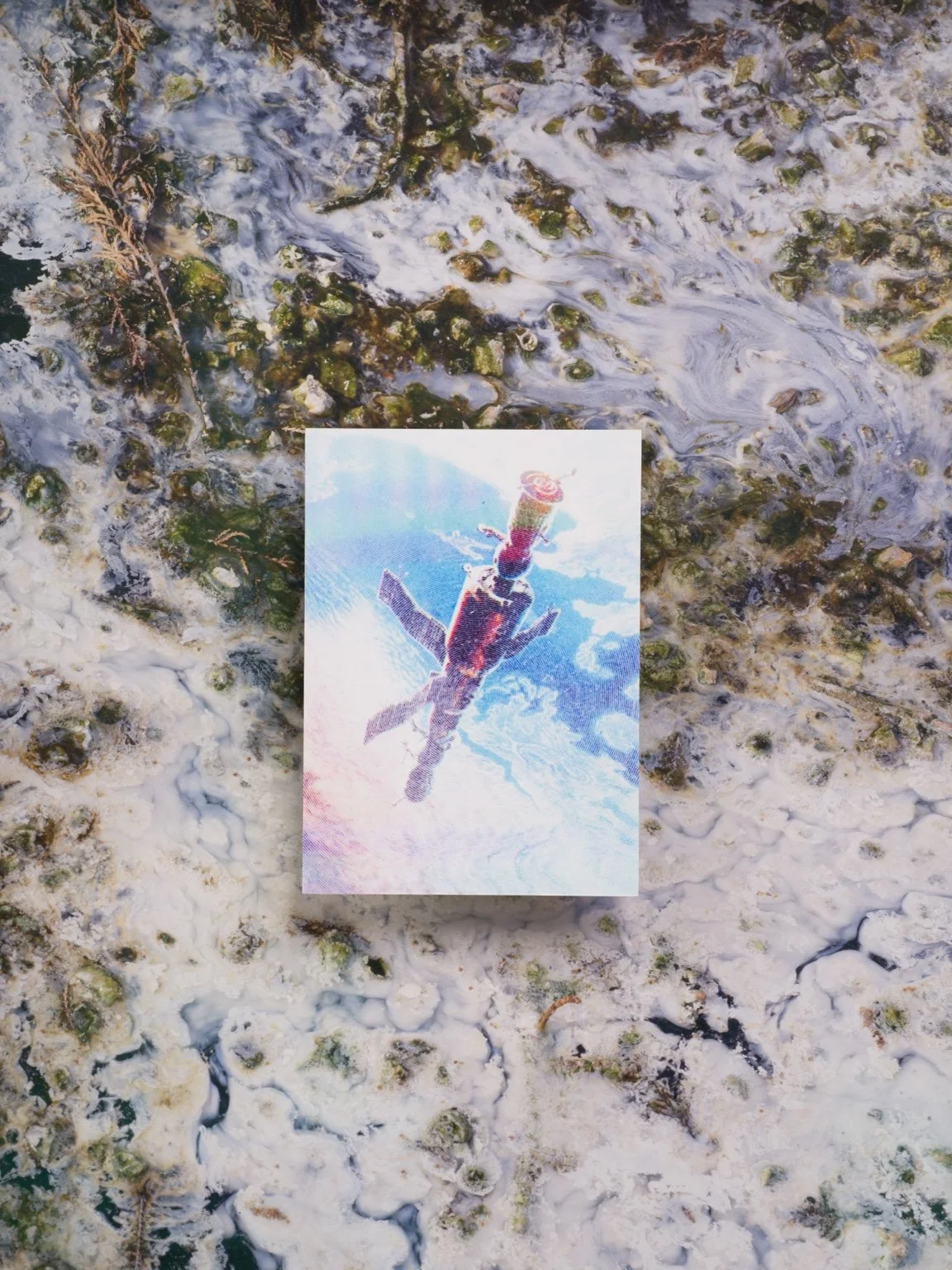
Three layers are stacked inside a deep walnut box. At the back is a photograph of salt crust at the Salton Sea, mounted on Dibond. Two inches in front of it, a sheet of Optium Museum Acrylic carries a print I made by scanning a 1980s Soviet propaganda postcard of a Soyuz above the Aral Sea, mounted on beveled Dibond and casting its shadow onto the Salton surface below.
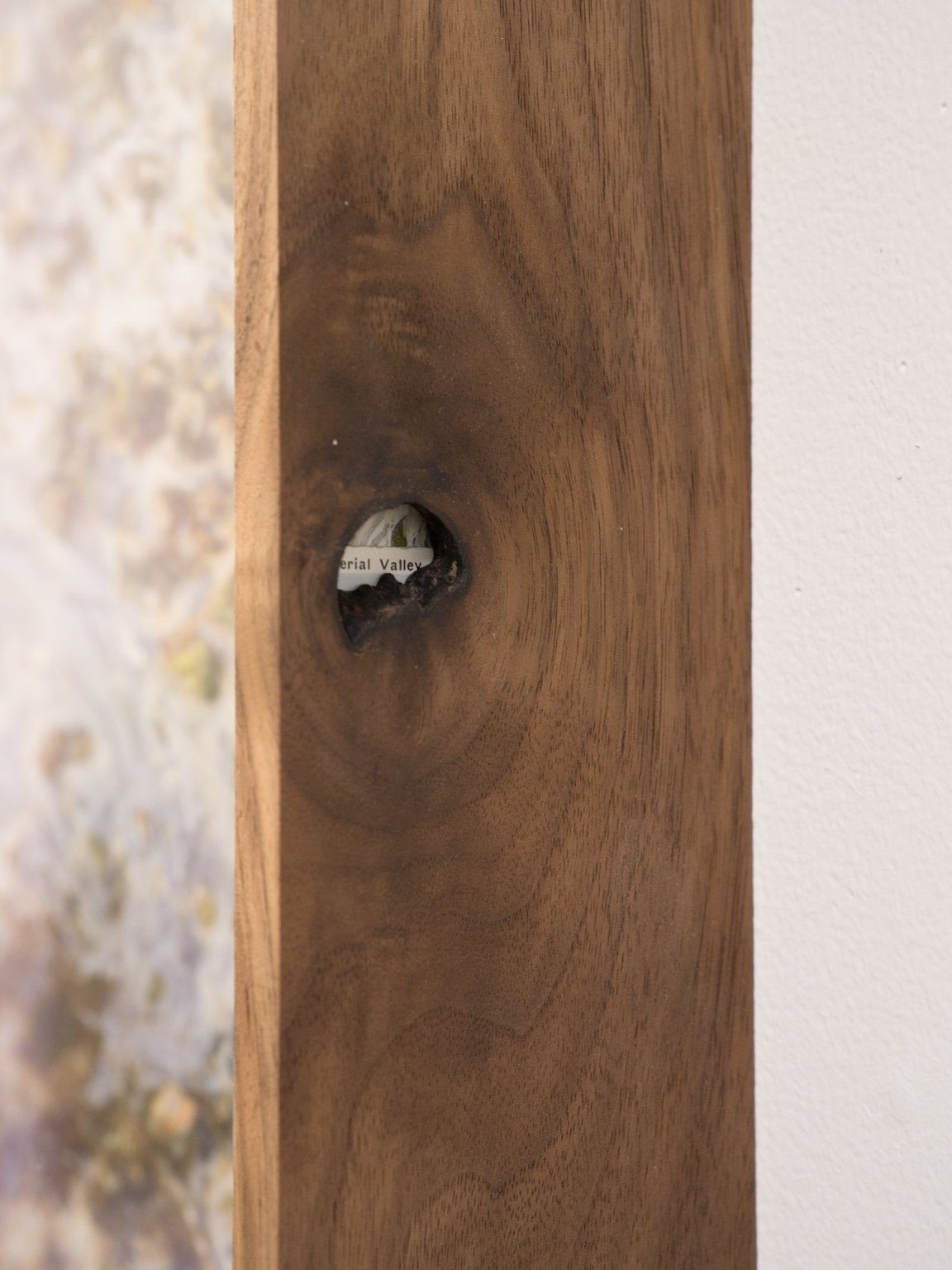
One inch further out, a second sheet of Optium closes the box. Because the acrylic is nearly invisible, the postcard seems suspended in the air above the other sea. A knot in the side of the box opens onto a fragment of printed text naming the Imperial Valley. The two seas are held in one object at measured distances.
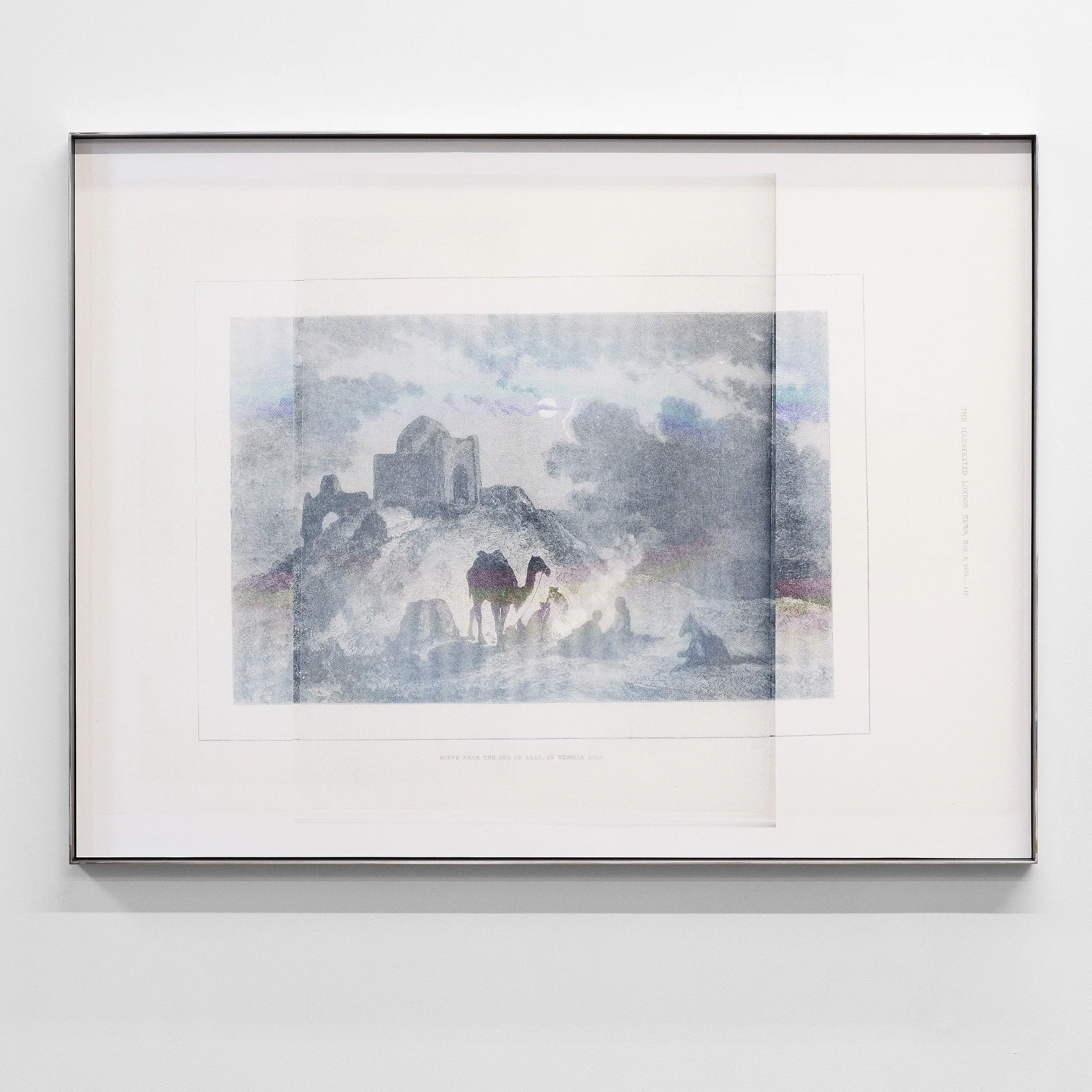
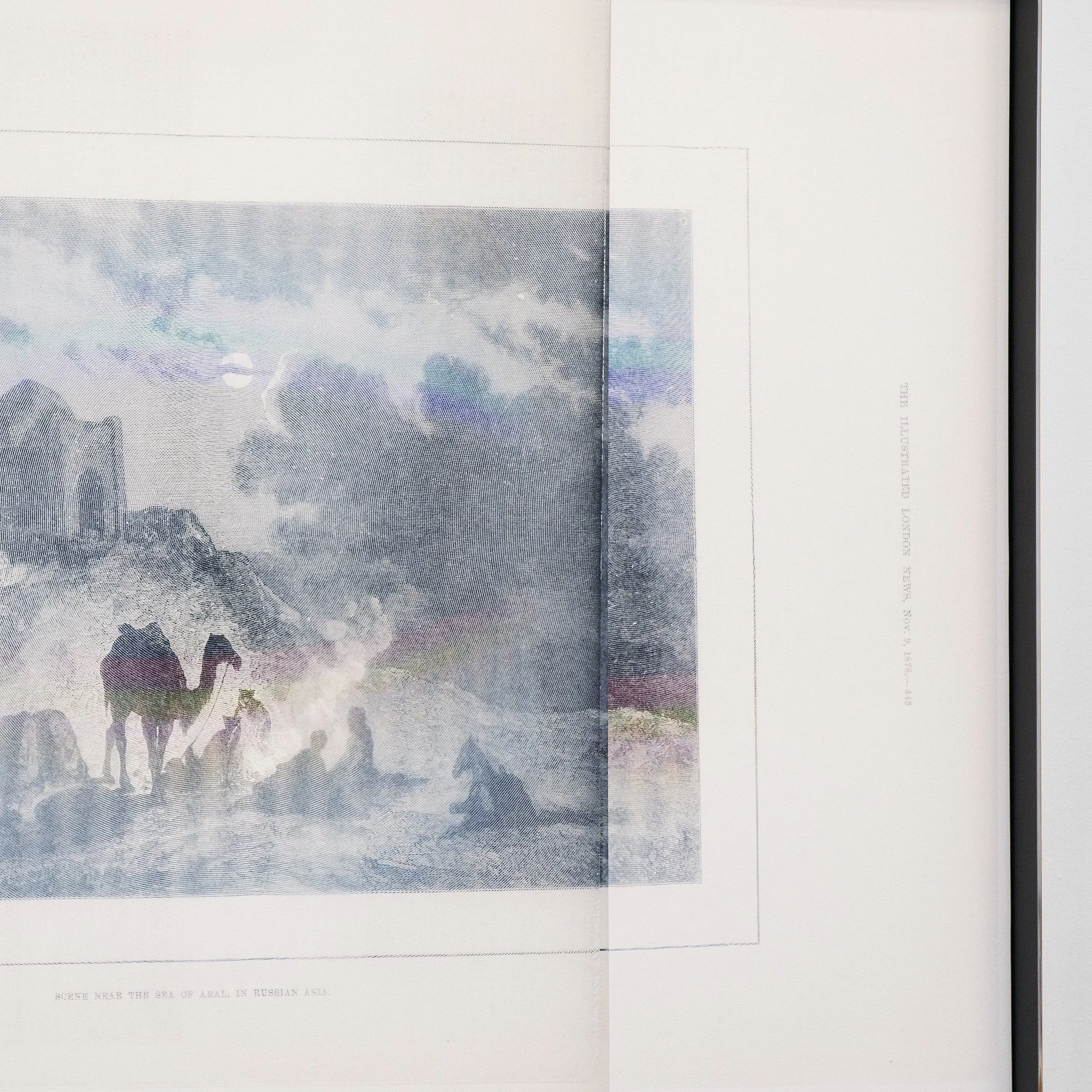
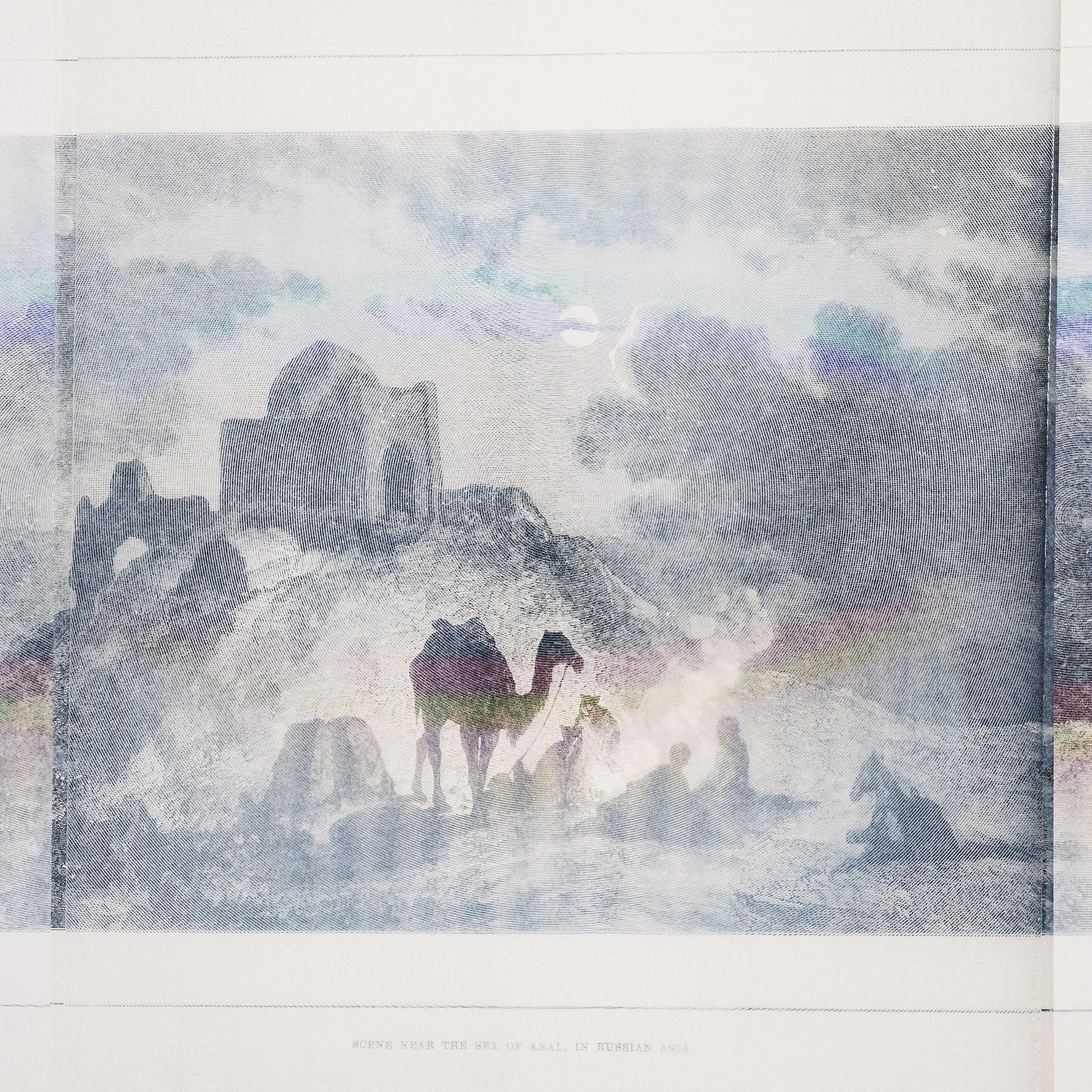
Scene Near the Sea of Aral, in Russian Asia, 2026
Archival pigment print mounted on Dibond, polished welded aluminum
32 × 42 × 2 in.
Scanned from a wood engraving published in The Illustrated London News on November 9, 1878, one of the images through which British readers came to picture Russian Central Asia. The title is its original caption. The sea itself never appears; it is held in the caption by the word near.
During scanning I laid Fresnel magnifier sheets, sanded by hand, over the page. A scanner’s light and sensor sit millimeters apart, so it cannot use a lens to magnify. It recorded the sheets’ concentric grooves, color banding, and sanding dust in the same plane as the engraver’s lines, and a second engraving formed over the first. The press made the Aral a Romantic landscape. The scan takes it up again as surface.
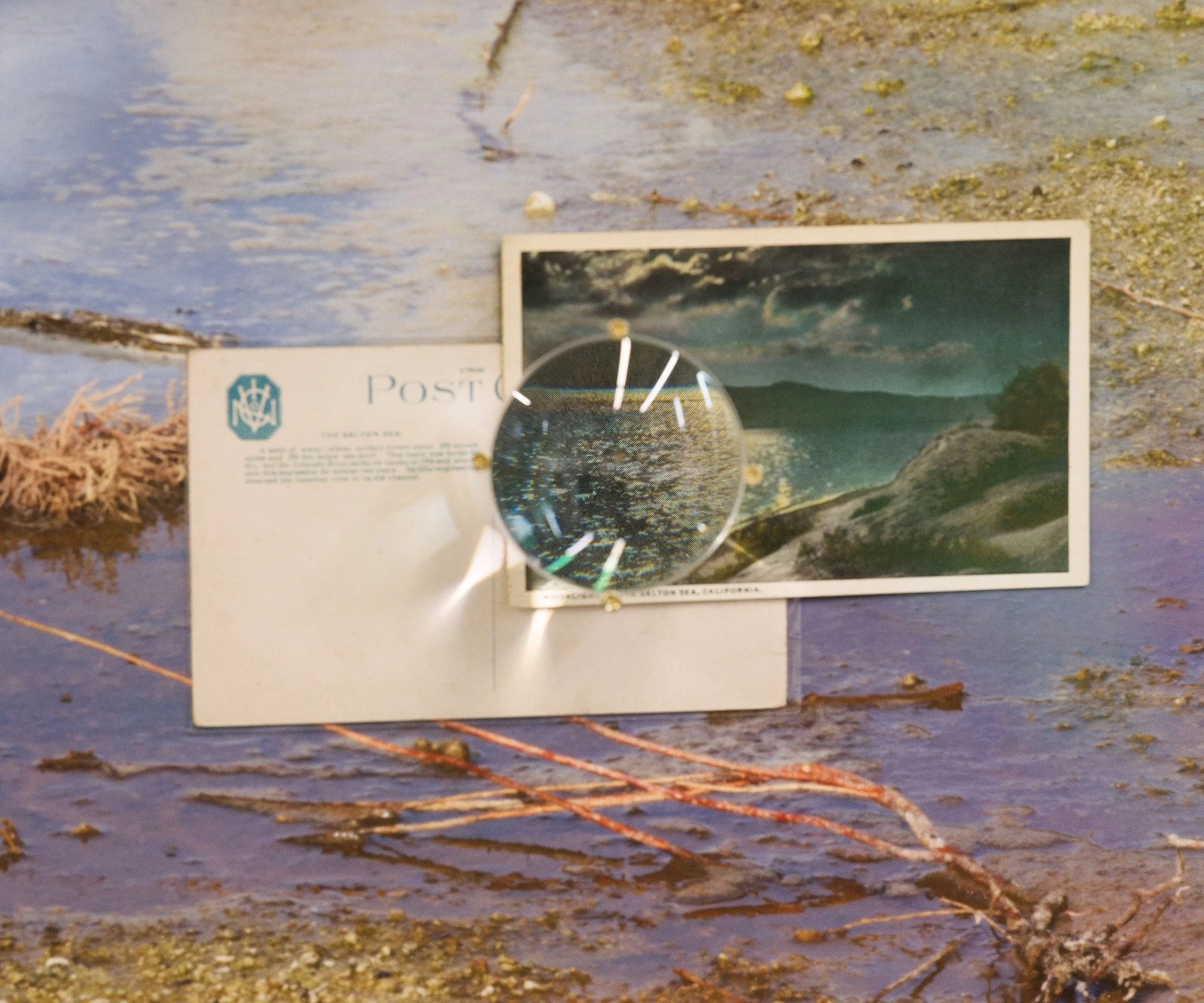
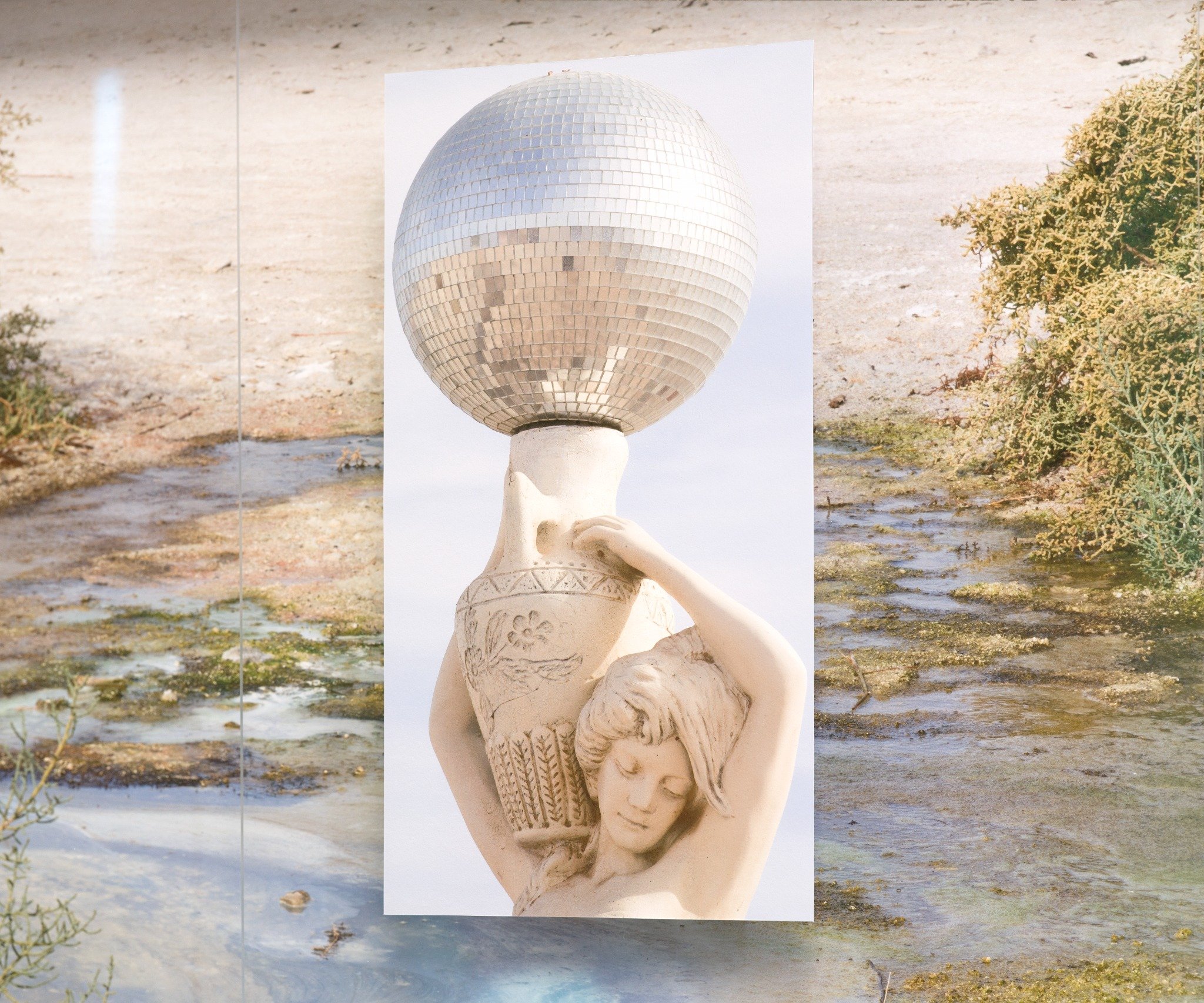
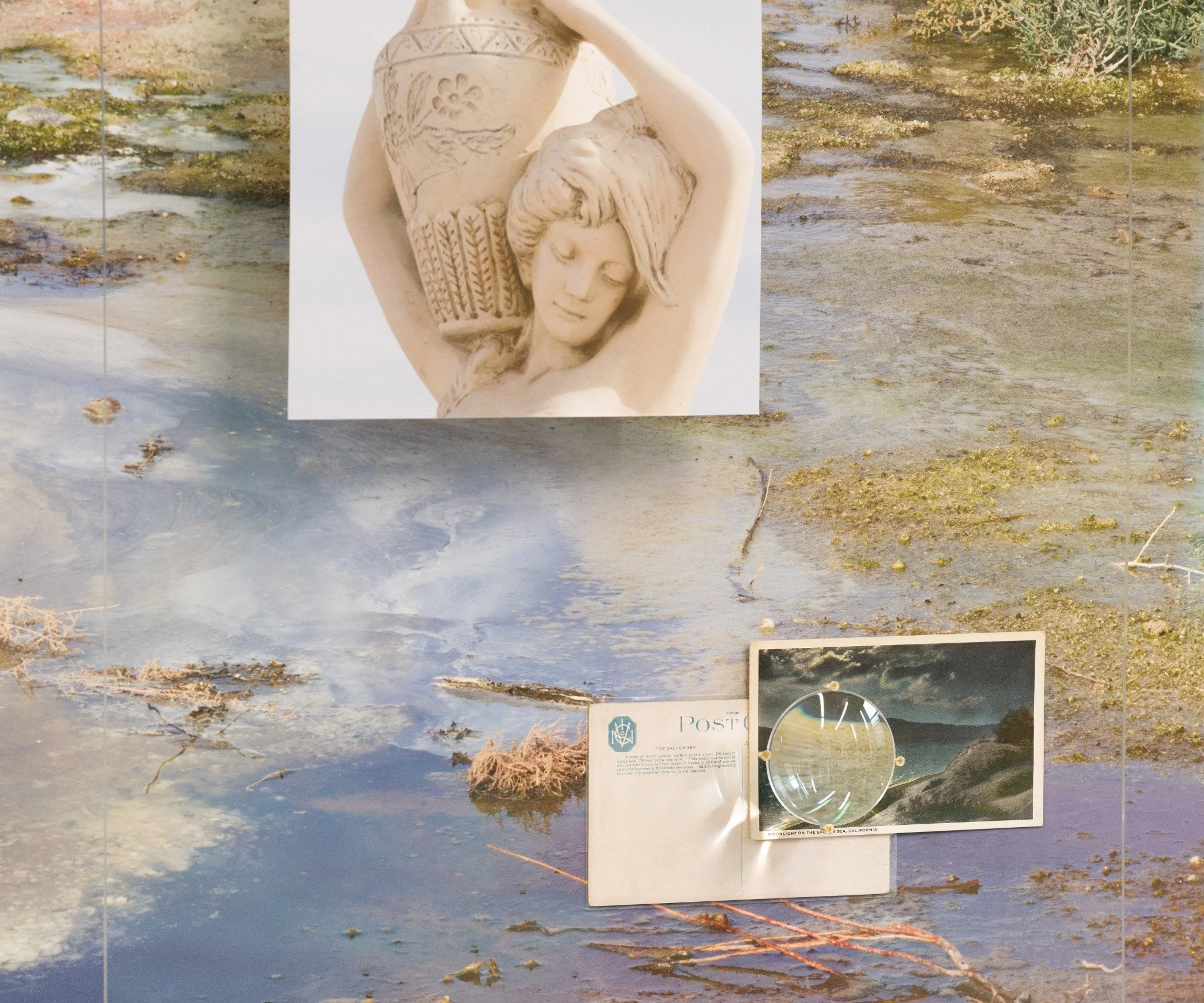
Moonlight on Lithium Valley, 2026
Archival pigment print mounted on Dibond, vintage postcards, collaged printed matter, magnifying lens, brass, polished Optium Museum Acrylic, artist frame
37 × 50 × 5 in
A sea does not disappear. It changes medium.
Since 2016, I have photographed the Salton Sea—its retreating water, exposed ground, and changing light. These photographs sit alongside historical postcards and found objects, within frames that give physical depth to the distance between images. Some of these waters I have stood before; others I know only through images.